
See your blood sugar before it becomes a problem.
You don’t need a diabetes diagnosis to care about your glucose. Here’s how to actually track it — tested devices, honest comparisons, no guesswork.
Why it matters
The number nobody checks until it's a diagnosis
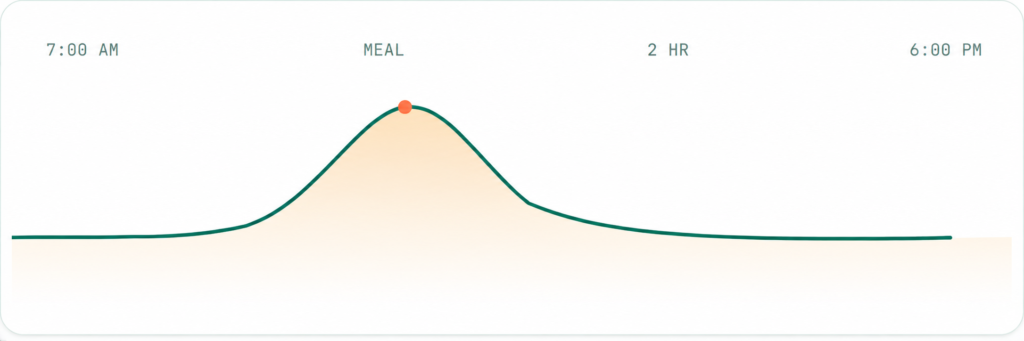
Eat a bagel, watch your glucose spike. Take a walk after lunch, watch it settle. Sleep badly, notice your fasting number creep up the next morning. This kind of real-time feedback is nearly impossible to get any other way — and it’s why glucose monitoring has quietly become one of the most talked-about tools in preventive health.
Below are three products worth considering depending on how deep you want to go: a full continuous glucose monitor, an accessory that keeps it from falling off early, and a low-cost alternative for occasional spot checks.
Not sure what a “normal” number even looks like yet? Start with our guide to blood sugar levels after eating before you start tracking your own.
1 in 3
The real benefit isn’t simply seeing a number on a screen. It’s understanding how your everyday choices affect your glucose — and using that information to make more informed decisions about meals, activity, sleep, and your overall health.
A CGM can give you continuous data, while a traditional glucose meter lets you check specific moments. The right choice depends on how much information you want, how often you want to test, and how much you’re willing to spend.
At a glance
Quick comparison
🥇 Abbott Lingo CGM
Best for: 24/7 glucose tracking
Main benefit: See how meals, exercise, sleep, and daily habits affect your glucose throughout the day.
Prescription: No
Wear time: Up to 14 days
→ Best choice if you want the most complete picture.
🛡️ Onida Over-Patches
Best for: Protecting your CGM sensor
Main benefit: Helps keep your sensor attached during workouts, showers, and everyday activity.
Type: CGM accessory
Coverage: 20 patches
→ Best choice if you already use a Dexcom G7 or Stelo.
🩸 Contour Next Test Strips
Best for: Occasional glucose checks
Main benefit: Check specific moments without wearing a sensor continuously.
Prescription: No
Use: Single-use strips
→ Best choice if you want simple, targeted measurements.
The picks
Reviewed & compared
Three products, three different levels of commitment — pick the one that matches how deep you actually want to go.
01 / Continuous Glucose Monitor
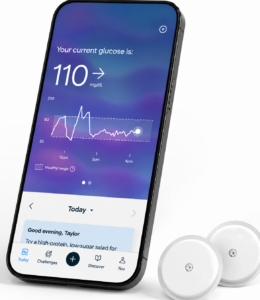
Abbott Lingo CGM (2-Pack)
Best for 24/7 tracking
Rx: None needed Wear: 14 days FSA/HSA eligible
Why choose Lingo? If you want the full picture — not a snapshot, but a continuous stream of data on how your body responds to everything you eat, do, and sleep through — this is the most accessible way to get it. FDA-cleared for over-the-counter use, no prescription hurdle.
- No finger pricking — the sensor continuously tracks glucose from your arm, so you can see how meals, exercise, sleep, and daily habits affect your readings without repeatedly testing your finger.
- Built-in coaching — the app helps connect your glucose readings with specific meals and habits, making the data easier to understand and use.
- Two sensors included — you get up to a full month of continuous tracking, giving you more time to identify patterns rather than relying on a few isolated readings.
- Free replacement — if a sensor fails before its intended 14-day wear period, the replacement policy can help you avoid losing the tracking period you paid for.
Who it’s for: Anyone who wants continuous insight into how meals, exercise, sleep, and daily habits affect their glucose, especially people who want more information than occasional finger-stick measurements can provide.
02 / CGM Accessory
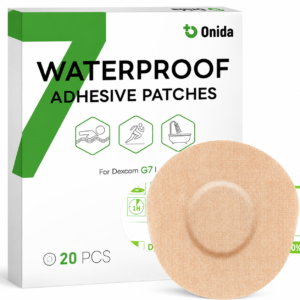
Onida Over-Patches for Dexcom G7 & Stelo
Best for making sensors last
Pack: 20 patches Waterproof Latex-free
The #1 complaint among CGM users: the sensor falls off early. Showers, workouts, sleep — all of it loosens the adhesive well before your 14 days are up, and a lost sensor means paying for a replacement. This patch fixes that for a few cents a day.
Why choose an over-patch? If you’ve already invested in a CGM, losing a sensor before its intended wear period can mean losing both valuable data and money. An over-patch is less about getting more glucose information and more about protecting the sensor you’ve already paid for and helping you get the full intended wear period from it.
- Waterproof & sweatproof — helps keep the sensor secure through showers, workouts, and everyday activity.
- Hypoallergenic weave — designed to provide additional support while being gentler on the skin than some adhesive covers.
- No-hole design — reinforces the sensor without covering the area needed for the sensor itself.
- 20-pack — gives you multiple replacements so you can maintain protection throughout several sensor cycles.
Who it’s for: Anyone already wearing a Dexcom G7 or Stelo who wants to protect their sensor, maintain adhesion during everyday activity, and reduce the chance of losing a sensor before its intended wear period.
03 / Test Strips
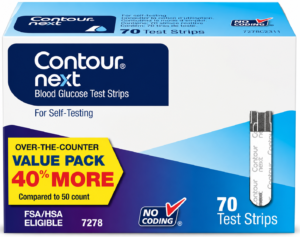
Ascensia Contour Next Test Strips
Best budget, no-subscription option
Count: 70 strips Sample: 0.6 µL No coding
Not everyone wants a monthly subscription and a sensor stuck to their arm 24/7. If you’d rather do occasional spot checks — first thing in the morning, or after a meal you’re curious about — a traditional meter and strips are a legitimate, far cheaper route.
Why choose test strips instead? If you don’t need 24/7 data, a traditional meter can give you a simpler and lower-cost way to answer specific questions — such as how your glucose looks when fasting or after a particular meal — without wearing a sensor continuously.
- No coding required — simplifies testing by removing a setup step that can contribute to user error.
- Tiny blood sample — requires only 0.6 µL of blood, which can make testing more comfortable for people who dislike larger samples.
- Second-chance sampling — lets you add more blood to the same strip if the first sample isn’t enough, helping reduce wasted strips.
- 70-count pack — provides enough strips for frequent spot checks without committing to a continuous sensor.
Who it’s for: Budget-conscious users or anyone who doesn’t need continuous tracking and simply wants an affordable way to check glucose at specific moments, such as fasting or after a meal.
Decision guide
How to choose
Want the full picture, 24/7?
A
Start with the Lingo CGM if you want continuous data that can help you understand how your meals, activity, sleep, and daily habits affect your glucose throughout the day.
Already wearing a Dexcom G7 or Stelo?
B
Consider an over-patch if your priority is keeping your sensor securely attached through showers, workouts, and everyday activity so you can get the full intended wear period.
Just want to dip a toe in?
C
Start with a Contour Next meter and strips if you want occasional readings without committing to a wearable sensor or ongoing CGM costs.
Once you’ve got the data, here’s what to actually do with it →
How to Lower Blood Sugar Levels Without Medication
Tracking your glucose is also one of the earliest ways to catch insulin resistance before it becomes a diagnosis — see our full guide: What Is Insulin Resistance? Signs, Causes & Natural Ways to Fix It.
Prefer a supplement-first approach instead of (or alongside) a monitor? See our guide to the best natural supplements for blood sugar control, including our full Gluco6 review.
Decision guide
FAQ
No. Both the Lingo and Dexcom Stelo are FDA-cleared for over-the-counter purchase by adults who don’t use insulin — no doctor’s visit required.
Usually not. Coverage is far more common for diagnosed diabetics. Over-the-counter CGMs for general wellness use are typically an out-of-pocket cost, though often HSA/FSA eligible.
Most over-the-counter sensors, including Lingo, last up to 14 days before needing replacement.
Depends on your goal. A CGM gives continuous, pattern-level data — great for spotting trends. Test strips are cheaper and fine for occasional spot-checks, but only capture a single moment.
The Bottom Line: Which Glucose Monitor Should You Choose?
If you want continuous insight, the Lingo CGM is the most comprehensive option in this comparison.
If you already use a Dexcom G7 or Stelo, an over-patch can help protect your investment and keep your sensor attached.
If you want simple, occasional measurements without wearing a sensor, Contour Next test strips are the more straightforward choice.
There isn’t one perfect option for everyone. The best choice depends on how much information you want, how often you plan to monitor, and whether you’re comfortable wearing a sensor.
Join our community  and get daily wellness tips delivered to your inbox