
Ready when you are
Small Habits, Big Impact — Starting Today
Add protein to your next meal. Take a short walk after eating. Protect your sleep like it’s part of your metabolism — because it is. If you want extra support, here’s where to start.
What Your Blood Sugar Is Really Telling You After Every Meal
That foggy, shaky, “why am I so tired” feeling after eating isn’t random — it’s your blood sugar levels reacting in real time. Here’s how to read the signal, without guessing.
- What normal blood sugar levels after eating actually look like
- How to tell if you’re leaning high or low — without a lab visit
- Daily habits that help lower blood sugar levels naturally
- Where supplements likeGluco6andSleepLeanfit in

What Are Normal Blood Sugar Levels After Eating?
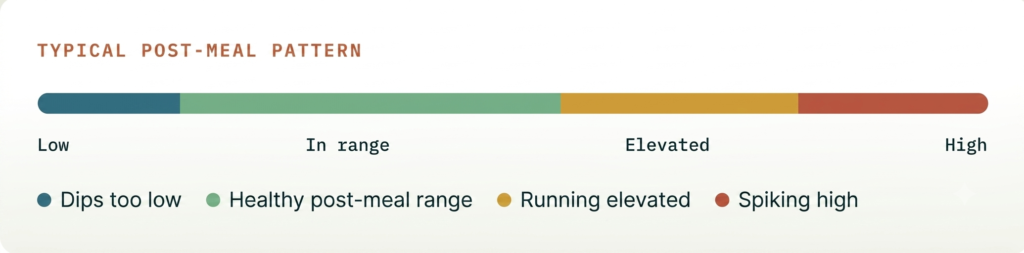
Right after a meal, glucose naturally rises — that part is normal. What matters is the shape of the curve: how high it climbs, and how smoothly it comes back down.
High or Low? How to Read the Signs Yourself
You don’t need a glucose meter to notice patterns. Your body is already talking — here’s what to listen for.
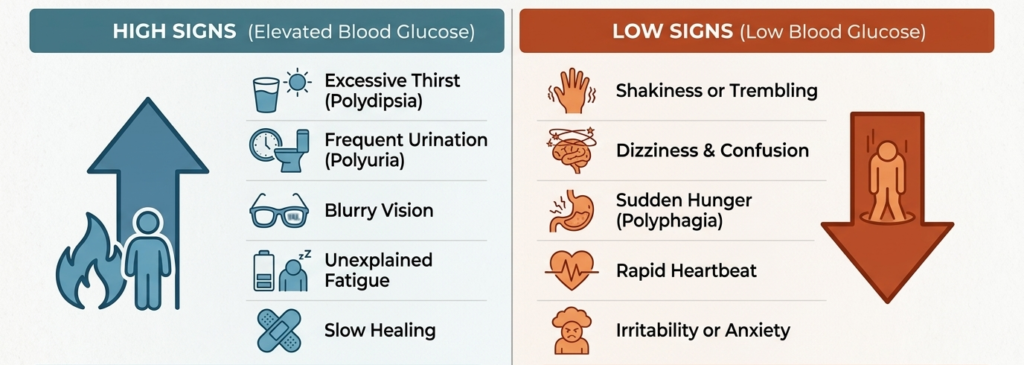
🔺 Signs it’s running high
- Unusual thirst or a dry mouth after meals
- Needing to urinate more often
- Feeling sluggish or “heavy” 1–2 hrs after eating
- Sugar cravings returning quickly
- Blurry vision, trouble focusing
🔻 Signs it’s running low
- Shakiness or trembling between meals
- Sudden irritability (“hangry“)
- Cold sweats, lightheadedness
- Intense hunger soon after eating
- Trouble concentrating
What Causes High Blood Sugar Levels After Eating?
A few everyday habits quietly push glucose higher than it should go:
- Large portions of refined carbs — white bread, pastries, soda
- Meals without enough protein or fiber
- Poor sleep quality the night before
- Chronic stress and elevated cortisol
- Little to no movement after eating
- Insulin resistance building up over time
Daily Habits That Help Lower Blood Sugar Levels Naturally
The goal isn’t perfection — it’s consistency. These are the habits that actually move the needle.
Rebuild your plate
- Add protein + fiber to every meal
- Swap refined carbs for whole grains
- Eat vegetables before carbs when possible
Move after you eat
- A 10–15 min walk blunts sugar spikes
- Even light movement beats sitting still
Protect deep sleep
- Poor sleep raises next-day insulin resistance
- One of the most overlooked factors overall
Manage stress proactively
- Chronic stress raises cortisol → raises glucose
- Short walks or breathing exercises help
These four habits are a strong starting point — for the complete step-by-step plan, see our full guide: Proven Habits to Lower Blood Sugar Levels Without Medication.

Where Supplements Fit In
Habits are the foundation. But when people want extra support, they usually search for supplements for blood sugar levels control — here’s where two specific options fit into the picture.
Product 01 · Metabolic support
Gluco6™ — Supporting Healthy Glucose Metabolism
Instead of relying on stimulants or appetite suppression, Gluco6™ is built around helping your body process glucose more efficiently — right where the after-meal crash actually starts.
- Supports GLUT-4 function — GLUT-4 receptors move glucose into cells for energy. When overwhelmed, sugar lingers in the bloodstream, contributing to crashes and stubborn weight gain.
- Helps reduce sugar spikes — supports steadier post-meal glucose, which may mean better energy, fewer cravings, and less snacking.
- Supports natural fat burning — includes metabolism-support ingredients that may help the body use stored fat more effectively.

SleepLean — Supporting Metabolism While You Rest
Sleep quality directly affects blood sugar and fat metabolism — poor sleep doesn’t just make you tired, it quietly works against your metabolism overnight.
- Supports healthy metabolism during rest — designed to work while you're actually asleep, not just during the day.
- Helps improve sleep quality — better rest, less next-day insulin resistance.
- Supports natural fat-burning overnight — so mornings feel like a fresh start, not a crash.

FAQ: Blood Sugar Levels After Eating
For most people, glucose typically starts settling within about 2 hours. Longer or more intense fluctuations are worth tracking and mentioning to a doctor.
You can watch for common signs like thirst, fatigue, or lingering cravings — but a meter or lab test is the only way to get a precise number.
Refined carbs and sugary drinks — white bread, soda, pastries — tend to cause the sharpest, fastest spikes.
No. Gluco6 and SleepLean are designed to support healthy eating, movement, and sleep — not replace them.
Occasionally, yes. But frequent post-meal drops (sometimes called reactive hypoglycemia) are worth discussing with a doctor.
Ready when you are
Small Habits, Big Impact — Starting Today
Add protein to your next meal. Take a short walk after eating. Protect your sleep like it’s part of your metabolism — because it is. If you want extra support, here’s where to start.