
Bleeding gums are not something you should simply accept as normal. If your gums regularly bleed when you brush or floss, it can be a sign that they are inflamed and need better care or professional attention.
The good news is that early gum inflammation can often improve when plaque is removed consistently and the gums are cared for correctly.
Gum recession is another common concern. Receding gums do not necessarily mean that your gums will continue to recede forever. The important goal is to identify what is contributing to the recession and prevent further damage.
This guide explains how to maintain healthy gums, reduce bleeding, protect against gum recession, remove plaque and tartar properly, and address habits such as teeth grinding and clenching.
Why Do My Gums Bleed When I Brush My Teeth?
Healthy gums generally should not bleed simply because you are brushing your teeth.
One of the most common reasons for bleeding is plaque buildup along the gumline. Plaque is a sticky film containing bacteria. If it is not removed regularly, it can irritate the gums and cause them to become red, swollen, tender, and prone to bleeding. This early inflammation is called gingivitis.
Other possible reasons for bleeding gums include:
- Inadequate brushing or cleaning between the teeth
- Tartar buildup
- Existing gum disease
- Brushing too aggressively
- Certain health conditions or medications
- Hormonal changes, including during pregnancy
- Smoking or tobacco use
So if your gums bleed every time you brush, don’t assume that this is simply how your gums are. Instead, pay attention to the pattern and improve your daily oral hygiene. If bleeding continues, becomes heavy, or is accompanied by swollen gums, pain, bad breath, loose teeth, or gum recession, arrange a dental examination.
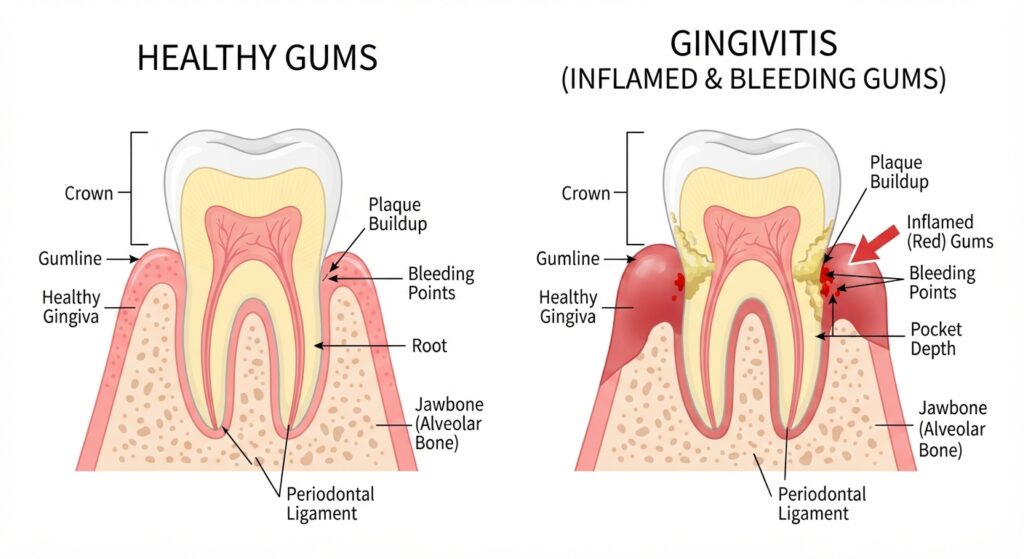
Gum Recession: What Actually Makes Gums Recede?
Gum recession means that the gum tissue has pulled back from the tooth, making more of the tooth surface or root visible.
It is easy to think of recession as simply meaning that your gums are “weak.” But the situation is more complicated.
Gum recession can have several contributing factors, including periodontal disease, traumatic brushing, naturally thin gum tissue, tooth position, and other local factors. Periodontal disease can cause the tissues supporting the teeth to become damaged, while exposed roots can also become more vulnerable to decay.
The important point is that receding gums do not automatically have to keep receding.
Treatment focuses on identifying the cause and controlling the factors that are damaging the gums. Good plaque control, a gentle brushing technique, professional dental care, and addressing habits such as clenching or grinding when appropriate can all be part of protecting the gums.
However, once gum tissue has physically receded, normal brushing and flossing generally cannot make it grow back. Some cases require treatment from a dentist or periodontist.
How to Prevent Gum Recession
One of the most useful things you can do is keep plaque under control without traumatizing the gums.
That means finding the right balance: brushing thoroughly enough to remove plaque, but not scrubbing the gums aggressively.
1/ Consider an Electric Toothbrush With a Pressure Sensor
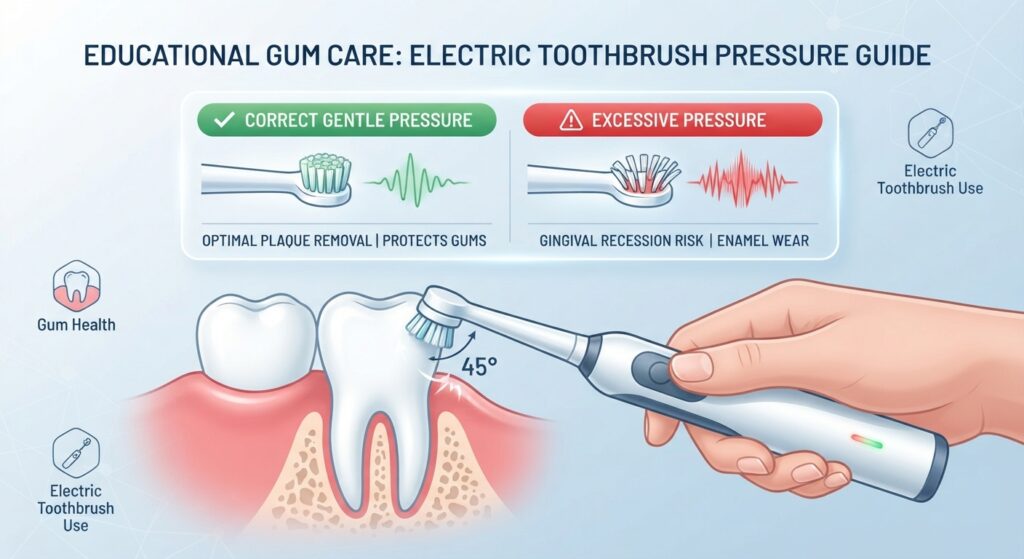
An electric toothbrush can make it easier to maintain consistent brushing technique. One particularly useful feature is a pressure sensor.
Many people press much harder than necessary when brushing. A pressure sensor can alert you when you are applying excessive force, helping you learn what appropriate pressure feels like.
The goal is not to brush as hard as possible.
Use gentle pressure and allow the toothbrush to do the cleaning. Follow the manufacturer’s instructions and brush twice a day with fluoride toothpaste.
When choosing an electric toothbrush, a working pressure sensor is a useful feature if you tend to brush aggressively.
Internal link
When choosing an electric toothbrush, a working pressure sensor is a useful feature if you tend to brush aggressively.
2/ Clean Between Your Teeth Every Day
Your toothbrush cannot properly clean every surface between your teeth.
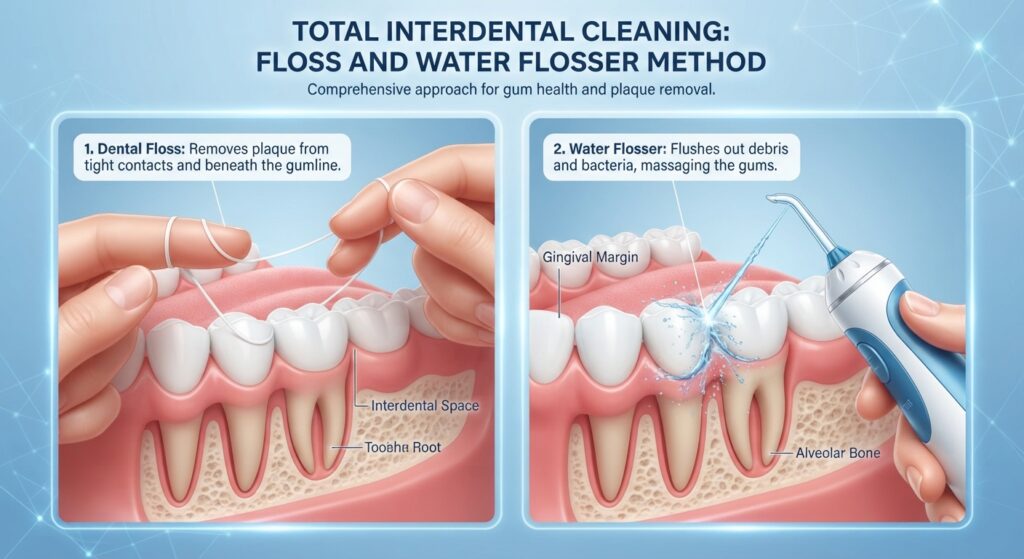
That is why cleaning between the teeth is an important part of maintaining healthy gums. Dental floss and other interdental cleaners help remove plaque from areas that toothbrush bristles cannot reach.
If your gums bleed when flossing, don’t automatically conclude that flossing is damaging your gums. Bleeding can occur when inflamed gums are being cleaned.
The better approach is to use the correct technique and clean between the teeth consistently rather than avoiding the area altogether.
What About Using Both Dental Floss and a Water Flosser?
A water flosser can be useful for cleaning between teeth and around areas that are difficult to reach.
Some people find it helpful to use traditional dental floss together with a water flosser, particularly when they have areas where plaque or food tends to collect.
However, there is no need to force yourself to use two devices if one appropriate interdental-cleaning method works well for your mouth. Your dentist or dental hygienist can recommend the most suitable option based on your teeth and gum condition.
The important habit is to clean between your teeth every day.
3/ Get Tartar Professionally Removed
Plaque is soft enough to remove with regular brushing and interdental cleaning.
Tartar is different.
When plaque hardens, it becomes tartar, also called calculus. Once tartar has formed, brushing and flossing at home cannot reliably remove it. Professional dental cleaning is required.
This is why trying to scrape tartar from your teeth yourself is not a good substitute for a professional cleaning.
A dentist or dental hygienist can remove deposits from the teeth and evaluate the condition of your gums.
Professional treatment becomes particularly important if you already have persistent bleeding, gum recession, deep gum pockets, loose teeth, or other signs of periodontal disease.
How to Remove Tartar From Teeth
If you are searching for how to remove tartar from teeth, the key distinction is:
- Plaque: can be removed at home with proper oral hygiene.
- Tartar: requires professional dental cleaning.
- Preventing new tartar: requires consistent brushing and cleaning between the teeth.
Regular home care helps prevent plaque from accumulating and hardening into more tartar.
4/ Pay Attention to Teeth Grinding and Clenching
Grinding or clenching your teeth, known as bruxism, can put excessive forces on the teeth and jaw.
Signs may include worn or damaged teeth, tooth sensitivity, jaw discomfort, headaches, or someone telling you that you grind your teeth while sleeping.
If you grind or clench regularly, speak with your dentist. They can assess whether your teeth are being damaged and whether a nighttime dental appliance is appropriate.
A dentist-made night guard can protect the teeth from damage caused by grinding. Different types of appliances are available, so it is better to have the device selected or fitted based on your individual situation rather than assuming one type is appropriate for everyone.
A night guard for sleeping is different from a sports mouthguard, which is designed to protect the teeth from impact during physical activity.
If you are trying to understand how to stop grinding and clenching your teeth at night, the first step is identifying why it is happening and discussing it with a dental professional.
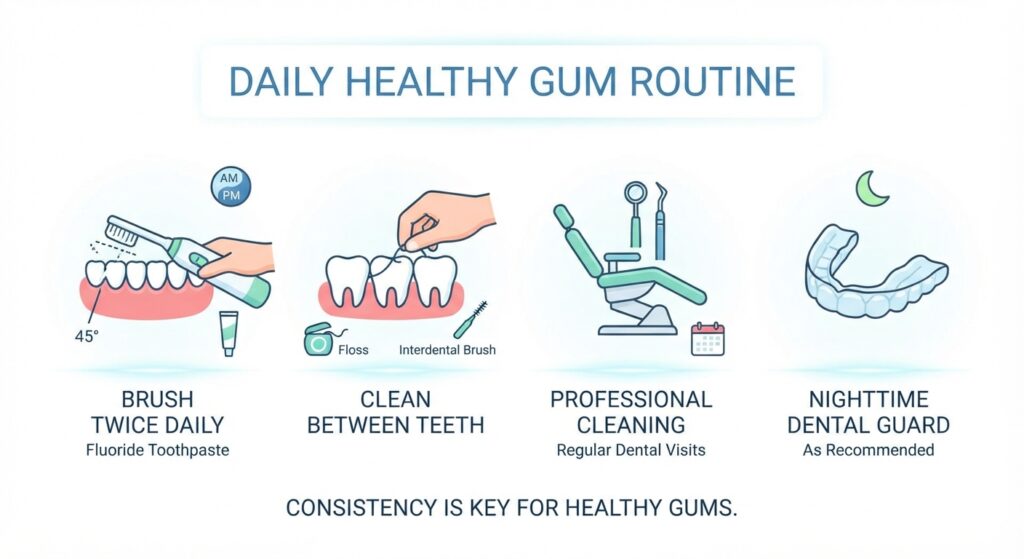
A Simple Daily Routine for Healthier Gums
You do not need a complicated routine.
A consistent routine is more useful:
Morning
- Brush your teeth with fluoride toothpaste for about two minutes.
- Use gentle pressure, especially around the gumline.
- Spit after brushing rather than immediately rinsing with water if following standard fluoride toothpaste guidance.
Once Each Day
- Clean between your teeth with dental floss, an interdental cleaner, or another method recommended by your dental professional.
- Use a water flosser if it is useful for your mouth and routine.
- Pay particular attention to areas where plaque tends to collect.
At Night
- Brush again with fluoride toothpaste.
- If you use a dentist-recommended night guard, wear it as directed.
- Keep your dental appliance clean according to the manufacturer’s or dentist’s instructions.
Regularly
- Have dental check-ups.
- Get professional cleaning when needed.
- Do not ignore persistent bleeding or gum recession.
- Avoid tobacco products, which increase the risk of gum disease.
A Simple Daily Routine for Healthier Gums
Do not wait until gum problems become painful.
Arrange a dental appointment if you notice:
- Gums that regularly bleed when brushing or flossing
- Red, swollen, or painful gums
- Persistent bad breath
- Gums pulling away from the teeth
- Teeth appearing longer because of gum recession
- Loose or shifting teeth
- Tooth sensitivity associated with exposed roots
- Significant tartar buildup
These symptoms can have different causes, and a dentist can examine your gums and determine whether you have gingivitis, periodontal disease, recession, or another problem.
A Helpful Oral Hygiene Resource
If you want a simple visual explanation of proper oral hygiene techniques, you can also explore this free oral hygiene guide from registered dental hygienist Whitney DiFoggio.
The video can reinforce the practical brushing and oral-hygiene techniques discussed above.
FAQ
Bleeding during flossing can happen when gums are inflamed because of plaque buildup. It can also occur if flossing technique is too aggressive. Persistent bleeding should be discussed with a dentist rather than simply ignored.
Yes, bleeding caused by plaque-related gingivitis can often improve when plaque is consistently removed through proper brushing and cleaning between the teeth. If bleeding continues, professional evaluation is important because more advanced gum disease may require dental treatment.
Use a gentle but effective brushing technique, keep plaque under control, clean between your teeth daily, avoid tobacco, and have your gums checked regularly. If you already have recession, a dentist can help identify contributing factors and determine whether additional treatment is needed.
Home oral hygiene can help prevent recession from getting worse, but receded gum tissue generally does not grow back simply from brushing or flossing. Treatment depends on the cause and severity of the recession.
Tartar cannot be effectively removed at home with normal brushing and flossing. A dentist or dental hygienist can remove it during a professional cleaning.
Talk to a dentist if you suspect nighttime grinding or clenching. A dentist can check for tooth damage and determine whether a nighttime dental guard or another approach is appropriate.
Final Takeaway
Healthy gums are not just about having clean-looking teeth. Bleeding, swelling, persistent bad breath, and gum recession are signs worth paying attention to.
The basics remain powerful: brush twice a day with fluoride toothpaste, clean between your teeth every day, use gentle brushing pressure, control plaque before it hardens into tartar, and maintain regular dental care.
If your gums are already bleeding or receding, do not assume that the problem has to continue. The right next step is to improve daily plaque control and have a dental professional assess the underlying cause.
Keep Reading on DailyReveals
Looking for additional oral-care options? Check out our practical roundup of the best products for fresh breath, healthy gums and strong teeth.