
How to Have Clear Skin Naturally: Food, Habits, and Simple Skin Care
If you are wondering how to have clear skin, the answer is usually not one special food, one supplement, or one skincare product.
Your skin is influenced by several things at the same time: what you eat, how you sleep, your stress levels, hydration, sun exposure, and the way you care for your skin.
Diet can also matter for some people, particularly when it comes to acne. Research suggests that diets high in refined carbohydrates and foods that quickly raise blood sugar may worsen acne in some people, although diet is only one part of the picture.
The good news is that many of the habits that support healthier-looking skin are simple. You can start at home without building a complicated routine.
1/ Start With Your Diet, Not Just Your Skincare Routine
Clear-looking skin starts with the basics.
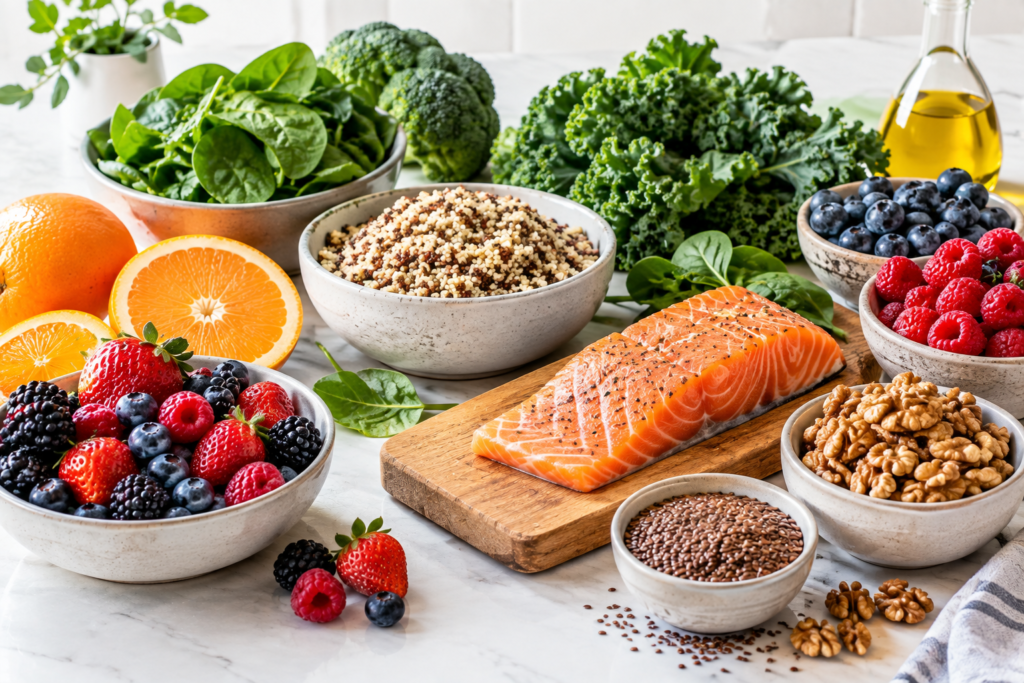
A balanced diet gives your body the nutrients it needs to maintain skin structure and normal repair. Instead of looking for one “perfect” food, build your meals around a variety of whole foods:
- Fruits and vegetables
- Whole grains
- Lean protein
- Nuts and seeds
- Fish and other sources of healthy fats
- Enough fluids throughout the day
The Mayo Clinic also recommends a healthy diet containing fruits, vegetables, whole grains and lean proteins, while limiting added sugar, processed snacks and refined carbohydrates.
This does not mean you have to completely eliminate every processed food.
A more realistic goal is to make minimally processed, nutrient-rich foods the foundation of your diet and reduce the foods you regularly eat that provide lots of refined carbohydrates, added sugar, and little nutritional value.
2/ Why Highly Processed Foods May Be Worth Limiting
“Processed food” is a very broad term, so it is important not to treat every processed food as equally harmful.
The bigger concern is often the overall nutritional pattern: highly refined carbohydrates, added sugars, heavily processed snacks, and foods that are easy to overeat.
Foods that rapidly raise blood sugar may be particularly relevant to acne. The American Academy of Dermatology notes that small studies have found fewer pimples in people following lower-glycemic diets, although other studies have not found the same connection and more research is needed.
There is also a difference between eating a food occasionally and building your everyday diet around it.
For example, you might focus more often on:
- Whole grains instead of highly refined grains
- Fruit instead of sugary snacks
- Water instead of sugar-sweetened drinks
- Nuts and seeds instead of highly processed snacks
- Vegetables and legumes as regular parts of meals
This approach is more sustainable than trying to completely “ban” every food you enjoy.
3/ Can Sugar and High-Glycemic Foods Make Acne Worse?ng
For some people, they may.
High-glycemic foods can cause blood sugar to rise quickly. The AAD explains that research suggests these blood sugar spikes may contribute to inflammation and increased sebum production, both of which can play a role in acne. However, the evidence is not completely consistent.
Foods commonly considered high-glycemic include:
- Sugary drinks
- Sweets and pastries
- White bread
- Some refined cereals
- Chips and fries
- Other heavily refined carbohydrate foods
This does not mean carbohydrates are bad for your skin.
Instead, consider the quality and quantity of the carbohydrates you eat. Vegetables, beans, fruit, and less-refined whole grains can fit into a skin-friendly diet.
What about milk?
There is also some evidence connecting cow’s milk with acne in certain populations. The AAD notes associations between cow’s milk and acne in several observational studies, while evidence does not show the same relationship for yogurt or cheese.
That does not mean everyone with acne needs to stop drinking milk.
If you repeatedly notice breakouts after a particular food, keeping a simple food and skin diary can help you identify patterns rather than unnecessarily eliminating large groups of foods.
4/ Eat Foods That Provide Skin-Supporting Nutrients
Instead of thinking only about what to remove, think about what you can add.
Your skin needs a range of nutrients to maintain its normal structure and function. Some especially useful nutrients can come from ordinary foods.
Collagen-supporting foods
Collagen is an important structural protein in the skin.
Your body makes collagen using amino acids and several nutrients, including vitamin C. Rather than focusing only on collagen products, build a diet that supplies the raw materials your body needs.
Foods such as:
- Fish
- Eggs
- Lean meats
- Dairy foods
- Beans and legumes
can contribute protein to your diet.
Bone broth is also commonly used as a source of collagen-related proteins, although its nutritional content can vary considerably depending on how it is prepared.
Vitamin C-rich foods
Vitamin C is particularly relevant because it is required for normal collagen formation.
Good food sources include:
- Oranges and other citrus fruits
- Strawberries
- Berries
- Peppers
- Other fruits and vegetables
You do not need to rely on a supplement simply because vitamin C is associated with skin health.
For most healthy adults, meeting nutrient needs through a balanced diet is the preferred starting point.

5/ Don't Forget Omega-3 Fatty Acids
Healthy fats are another part of a balanced diet.
Omega-3 fatty acids are found naturally in foods such as:
- Fatty fish
- Walnuts
- Flaxseed
- Chia seeds
Fatty fish such as salmon, sardines and mackerel are particularly useful dietary sources.
There is ongoing research into the relationship between omega-3 fats and inflammatory skin conditions. They should not be viewed as a cure for acne or psoriasis, but including sources of healthy fats in a balanced diet is a reasonable part of overall nutrition.
The AAD has also noted that fatty acids and fruit and vegetable intake have been investigated for possible protective effects against acne, although the evidence is not strong enough to treat diet as a standalone acne treatment.
6/ Vitamin A Is Important — But Be Careful With Supplements
Vitamin A has an important role in normal skin health.
But this is one area where more is not necessarily better.
For most healthy people, getting nutrients from food is a sensible first approach. The American Academy of Dermatology recommends that healthy adults generally try to meet their nutrient needs through their diet and use supplements when there is a specific reason to do so.
Vitamin A can be found in foods such as:
- Sweet potatoes
- Carrots
- Leafy green vegetables
- Eggs
- Dairy products
- Some fish
One correction worth making to a common assumption: oranges and strawberries are excellent sources of vitamin C, but they are not major sources of vitamin A.
If you are considering a high-dose vitamin A supplement, speak with a healthcare professional first rather than taking large amounts on your own.
7/ Fiber and Fermented Foods Can Support a Healthy Diet
Fiber is easy to overlook when people talk about skin.
Yet a diet containing plenty of fiber-rich plant foods supports overall digestive and metabolic health.
Good sources include:
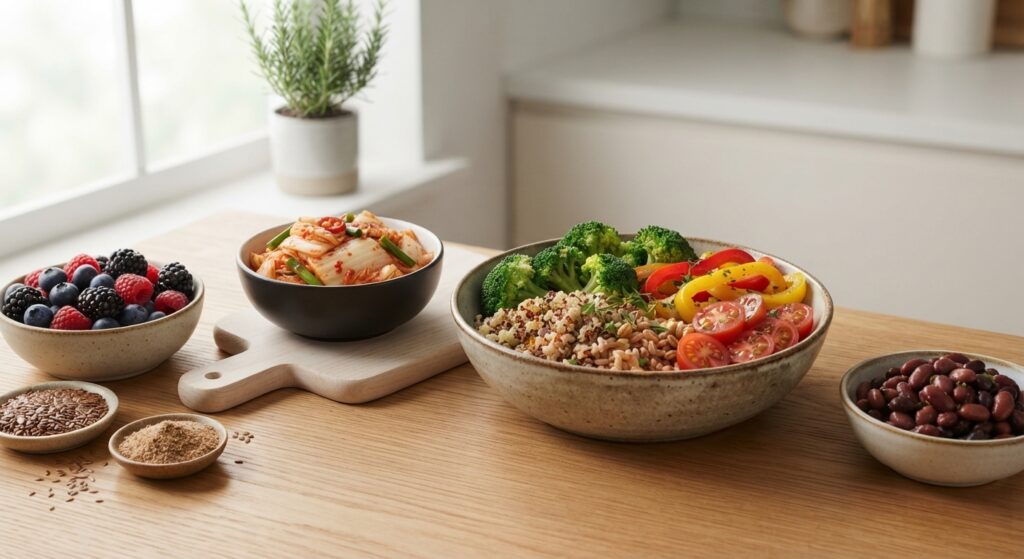
- Fruits
- Vegetables
- Beans and lentils
- Whole grains
- Nuts and seeds
You can also include fermented foods such as kimchi and other traditionally fermented vegetables.
These foods can contain live microorganisms, depending on how they are produced and stored. They can be a useful addition to a varied diet, but it is too strong to say that fermented foods will automatically reduce skin inflammation or clear acne.
Think of them as one part of a healthy eating pattern, not a treatment.
8/ Sleep Is Part of Your Skin Routine
You can have a good diet and still struggle with your skin if your everyday habits are working against you.
Sleep is one of those habits.
Poor sleep can affect how you feel and how well your body handles stress. Stress itself can make acne and some other skin problems worse. Mayo Clinic guidance also includes getting enough sleep as part of healthy skin and stress management.
Instead of looking for complicated sleep hacks, start with simple habits:
- Keep a relatively consistent sleep schedule.
- Give yourself enough time to sleep.
- Reduce unnecessary late-night screen time.
- Avoid making your evening overly stressful.
- Keep your bedroom comfortable and dark.
You do not need perfect sleep every night.
The goal is to make good sleep a regular habit.
9/ Stress Can Show Up on Your Skin
This is one of the most overlooked parts of the clear-skin conversation.
Stress does not mean that your skin problems are “all in your head.” Stress can have real effects on the body, and dermatology guidance recognizes that stress can make skin more sensitive and trigger acne breakouts or other skin problems.
That is why someone can eat well and use good skincare but still feel that their skin is constantly reacting.
If you are under a lot of pressure, focus on habits that are actually realistic:
- Sleep enough.
- Walk or exercise regularly.
- Take breaks from work or studying.
- Spend time with people you enjoy.
- Practice relaxation, breathing, meditation or another activity that helps you decompress.
- Reduce unnecessary commitments when possible.
You do not need to remove all stress from your life.
The goal is to make your overall routine more manageable.

A related video from the Respire YouTube channel on health and lifestyle factors.
10/ Don't Ignore Hydration and Alcohol
Water is simple advice, but that does not make it useless.
Being adequately hydrated supports normal body function, and drinking water is part of the healthy lifestyle advice recommended by Mayo Clinic for skin health.
At the same time, drinking more and more water will not magically clear acne.
Aim for normal hydration throughout the day and pay attention to your thirst, activity level, weather and other factors that affect fluid needs.
Alcohol is another habit worth considering.
Regular excessive alcohol consumption can interfere with sleep and can make it harder to maintain healthy daily habits. If your goal is healthier-looking skin, keeping alcohol moderate or limiting it may be useful as part of your overall lifestyle.
11/ You Can Get Clearer Skin Naturally — But Don't Ignore Basic Skincare
If you want to know how to get clear skin naturally at home without products, there is an important distinction.
You can improve many lifestyle factors without buying anything:
- Eat more whole, nutrient-rich foods.
- Reduce excessive added sugar and highly refined foods.
- Get enough sleep.
- Manage stress.
- Stay adequately hydrated.
- Avoid smoking.
- Protect your skin from excessive sun exposure.
- Avoid constantly touching or picking at breakouts.
But “natural” does not automatically mean “better.”
For acne-prone skin, gentle skincare can make a real difference. The AAD recommends gentle cleansing and avoiding irritation because aggressive scrubbing and picking can make breakouts worse.
Sun protection is also important for maintaining healthy-looking skin and reducing premature skin aging. Mayo Clinic recommends broad-spectrum sunscreen, shade and protective clothing as part of basic skin care.
So you do not need a complicated 10-step routine.
You need a routine that is gentle, consistent and appropriate for your skin.
12/ What About Serums, Masks and Toner Pads?
Food and lifestyle habits provide the foundation, but topical skincare can address the skin directly.
For example, a simple routine may include products designed for:
- Cleansing
- Moisturizing
- Sun protection
- Hydration
- Specific concerns such as acne or uneven-looking skin
That article can be particularly useful if you want to look beyond diet and daily habits and explore products such as masks, serums and toner pads.
The key is not to treat skincare products as a replacement for healthy habits. They work alongside them.
13/ What About Skin Supplements?
The same principle applies to supplements.
A supplement can provide nutrients such as vitamin C, collagen peptides or other ingredients, but it should not replace a balanced diet.
For healthy adults without a known deficiency, the American Academy of Dermatology recommends getting nutrients primarily through food.
If you are interested in supplements specifically for youthful-looking skin, our guide to Best Skin Health Supplements for Youthful Skin may be a useful next step:
It can help you explore the supplement side separately without turning this article into a product list.
14/ A Simple Daily Routine for Clearer-Looking Skin
You do not need to change everything at once.
Try building your day around these basic habits:
Morning
- Eat a nutritious breakfast with protein and whole foods.
- Drink water according to your normal needs.
- Use gentle skincare.
- Apply broad-spectrum sunscreen when appropriate.
During the day
- Eat fruits and vegetables regularly.
- Include protein with meals.
- Choose whole grains and fiber-rich foods more often.
- Include healthy fat sources such as nuts, seeds or fish.
- Limit excessive sugary drinks and highly refined snacks.
- Stay active.
Evening
- Eat a balanced dinner.
- Avoid making alcohol a regular part of your routine.
- Cleanse your skin gently.
- Avoid picking or squeezing pimples.
- Give yourself enough time to sleep.
- Do something relaxing before bed.
The goal is not perfection.
Consistency is more useful than constantly changing your routine.
FAQ: How to Get Clear Skin Naturally
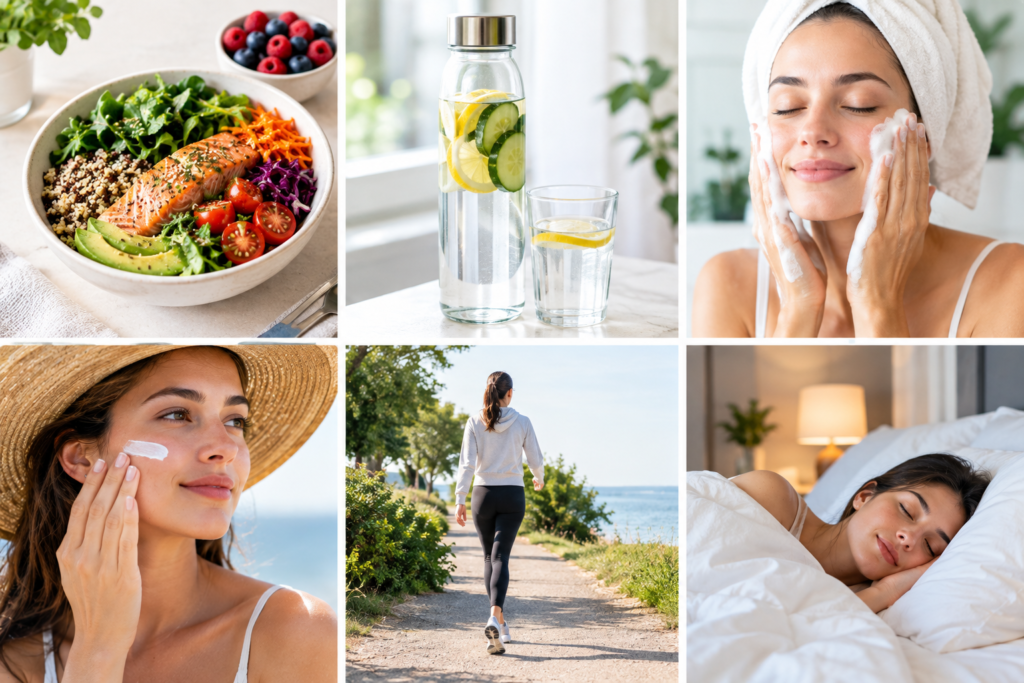
Start with the basics: eat a balanced diet, reduce excessive added sugar and highly refined foods, sleep enough, manage stress, stay hydrated, protect your skin from the sun and use gentle skincare.
If acne is persistent or severe, lifestyle changes alone may not be enough. Dermatologists have evidence-based treatments that can help.
Focus on a varied diet containing fruits, vegetables, whole grains, protein-rich foods, nuts, seeds and healthy fats.
Vitamin C-rich foods such as citrus fruits and berries can support normal collagen formation, while fish, nuts and seeds provide useful sources of healthy fats and other nutrients.
Research suggests that high-glycemic foods may worsen acne for some people. Some studies have also found an association between cow’s milk and acne. However, these relationships are not universal, and diet is only one factor involved in acne.
There is no single food that reliably clears acne.
A practical approach is to eat a balanced diet rich in vegetables, fruit, fiber, whole grains, protein and healthy fats while reducing excessive refined carbohydrates and added sugar. If you suspect a particular food triggers your breakouts, track your diet and skin over time rather than eliminating foods without a reason.
You can improve your skin health without buying many products by improving your diet, sleep, stress management, hydration and other habits.
However, some skincare basics—especially gentle cleansing and sun protection—can still be useful. For acne, evidence-based topical treatments may also be necessary.
Healthy-looking smooth skin usually comes from several factors working together: adequate nutrition, hydration, sun protection, gentle skincare, sufficient sleep and avoiding habits that irritate your skin.
If roughness, persistent acne, rashes or other changes continue, a dermatologist can help determine the cause.
Conclusion: Clear Skin Starts With Consistent Habits
Learning how to have clear skin is less about finding one perfect food or product and more about building habits that support your skin over time.
Start with the foundations:
- Eat a varied, nutrient-rich diet.
- Get enough protein, fruits and vegetables.
- Include healthy fats such as those from fish, walnuts and flaxseed.
- Get vitamin C from foods such as citrus fruits and berries.
- Limit excessive added sugar and highly refined carbohydrates.
- Pay attention to foods that seem to trigger your breakouts.
- Sleep well.
- Manage stress.
- Stay adequately hydrated.
- Protect your skin from the sun.
- Keep your skincare routine gentle.
And remember: clear skin does not have to mean perfect skin.
Acne and other skin conditions can have multiple causes, and diet alone cannot treat every case. If breakouts are persistent, painful, severe or leaving scars, professional dermatology advice can be much more useful than continually changing your diet or buying new products.
For readers who want to explore the topic further, the DailyReveals guides on skin health supplements and skin care products provide separate resources for the supplement and topical-skincare sides of the equation.
Join our community  and get daily wellness tips delivered to your inbox