
Insulin Resistance: What It Is, Why It's Ruining Your Health, & How to Reverse It Naturally
If you feel constantly tired, store fat easily — especially around your belly — and crash after meals, insulin resistance might be the silent culprit. Here’s everything you need to know.

Something is quietly happening inside the bodies of hundreds of millions of people worldwide — and most of them have absolutely no idea. It doesn’t always show up on standard blood tests. Doctors often miss it for years. And yet it’s one of the most damaging things that can happen to your metabolism, your brain, your hormones, and your waistline.
It’s called insulin resistance — and if you’re struggling with stubborn belly fat, constant fatigue, intense sugar cravings, brain fog, or mood swings, there’s a very real chance it’s already affecting you.
The good news? Insulin resistance is not a life sentence. With the right information and the right daily habits — the kind we break down in detail in this guide — you can genuinely reverse it, restore your metabolism, and feel like a completely different person.
📖 WHAT’S IN THIS GUIDE
- What Is Insulin Resistance? (Plain English)
- How Does It Develop?
- Signs & Symptoms You Shouldn’t Ignore
- What Insulin Resistance Does to Your Body & Brain
- 6 Proven Daily Habits to Reverse It Naturally
- Top Natural Supplements That Help
- The Full Picture: Sleep, Stress, Belly Fat & More
- Frequently Asked Questions
- Conclusion & Action Plan
🔬 What Is Insulin Resistance? (Explained Simply)
Let’s start with the basics — no medical degree required.
Every time you eat — especially carbohydrates and sugars — your blood sugar rises. Your pancreas responds by releasing a hormone called insulin, which acts like a key. Its job is to unlock your cells so they can absorb glucose from your blood and use it for energy.
In a healthy body, this works perfectly. Your cells respond to insulin, glucose enters, blood sugar drops back to normal, and you feel good.
But here’s what happens with insulin resistance:
-
Your cells stop “listening” to insulin After years of being bombarded with blood sugar spikes, your cells become desensitized to insulin’s signal — like turning down the volume on a TV that’s always too loud.
-
Your pancreas panics and pumps out MORE insulin To compensate, your body floods the system with even more insulin — trying to force cells to respond. This works temporarily, but at a cost.
-
Excess insulin drives fat storage — especially belly fatChronically elevated insulin is the body’s primary fat-storage hormone. It locks fat inside cells and prevents your body from burning it as fuel.
-
Blood sugar becomes unstableYou experience energy crashes, intense cravings, brain fog, and irritability — the classic blood sugar rollercoaster that millions live with daily, often not knowing why.
The scary part: Insulin resistance can exist for 5–10 years before it develops into Type 2 diabetes — silently damaging your blood vessels, brain, heart, and hormones the entire time. Early action is everything.
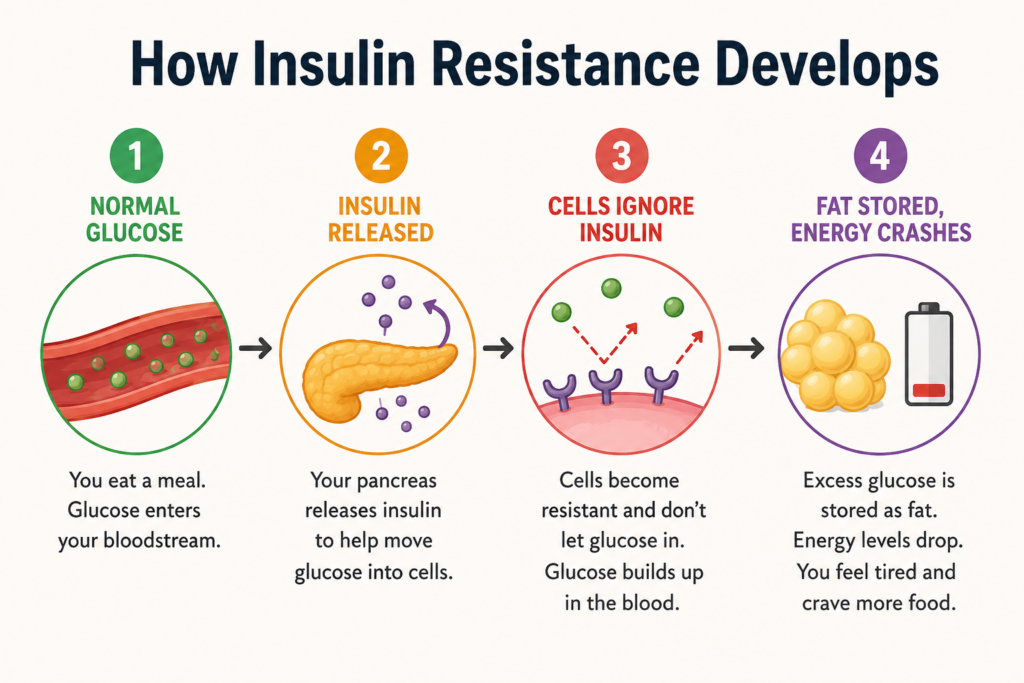
🧬 Insulin Resistance Causes: How Does It Actually Develop?
Insulin resistance doesn’t happen overnight. It’s the result of years of metabolic stress building up quietly. These are the most common drivers:
- 🍬 High-sugar, high-refined-carb diets — The modern Western diet is essentially a perfect insulin resistance generator. Bread, pasta, sugary drinks, ultra-processed snacks — each one spikes blood sugar and forces another insulin surge.
- 🛋️ Sedentary lifestyle — Muscle tissue is your body’s primary glucose disposal site. When you don’t move, your muscles become metabolically inactive — accelerating insulin resistance dramatically.
- 😫 Chronic stress (high cortisol) — Cortisol directly raises blood sugar as part of the “fight or flight” response. Chronic stress means chronically elevated blood sugar — and chronically elevated insulin. This is one of the most underappreciated causes of insulin resistance.
- 😴 Poor sleep quality — Even one night of poor sleep significantly impairs insulin sensitivity. Chronic sleep deprivation is one of the fastest ways to develop insulin resistance — and one of the least discussed.
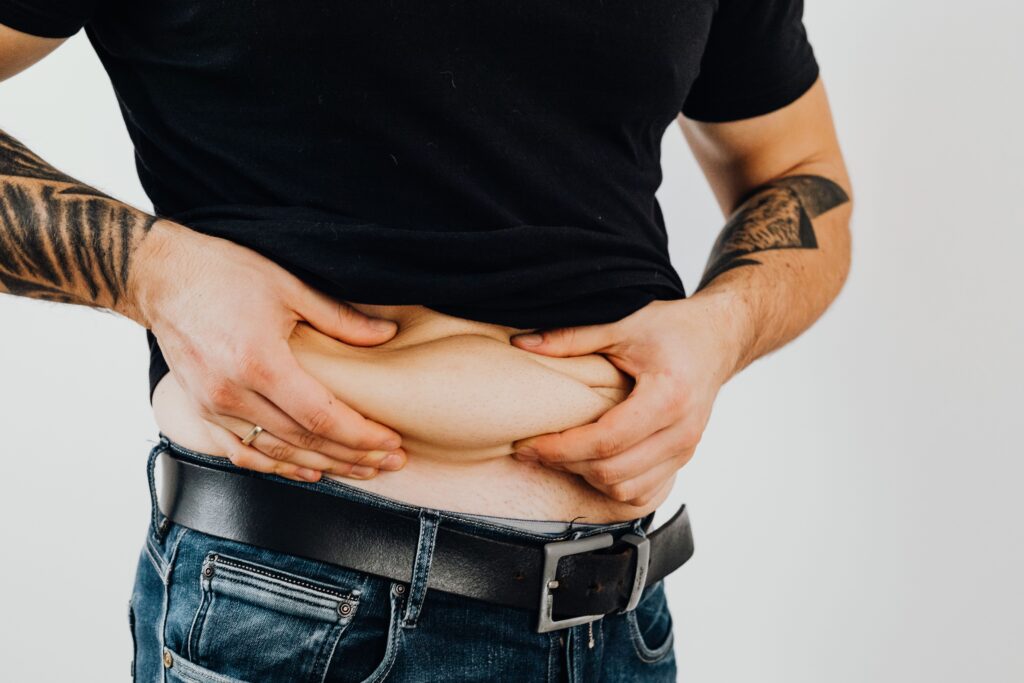
- 🫃 Excess body fat — especially visceral (belly) fat — Fat stored around the abdomen actively releases inflammatory signals that impair insulin signaling throughout the body.
- 🧬 Genetics & family history — Some people are genetically predisposed, but lifestyle factors are the primary driver in most cases.
- 🌑 Lack of morning sunlight — Morning light exposure regulates circadian rhythms that directly influence insulin sensitivity and metabolic health. This is newer research — but highly compelling.
Key insight: Most insulin resistance is lifestyle-driven — which is why it’s also lifestyle-reversible. You have far more power over this than most doctors will tell you.
Insulin Resistance Symptoms: Is This You?
Many people live with insulin resistance for years — blaming stress, age, or “just being tired.” Here are the real warning signs your body sends:
1 in 3
84M+
10 yrs
88%
⚡ Physical Symptoms
- 🫃 Stubborn belly fat that won’t budge no matter what you eat or how much you exercise
- 😩 Constant fatigue and low energy, especially after meals
- 🍫 Intense sugar and carb cravings — especially in the afternoon
- 💤 Post-meal sleepiness — that heavy, foggy feeling 30–60 minutes after eating
- 🫀 High blood pressure or elevated triglycerides on lab work
- 🖤 Dark skin patches (Acanthosis nigricans) around the neck or armpits — a classic sign
🧠 Mental & Emotional Symptoms
- 🌫️ Brain fog — difficulty concentrating, thinking clearly, or remembering things
- 😤 Irritability and mood swings — often connected to blood sugar crashes
- 😔 Low motivation and “flat” mood — insulin resistance impairs dopamine function
- 😰 Anxiety and heightened stress response — cortisol and insulin are deeply interlinked
If you checked 3 or more of those boxes, please keep reading. The habits and tools in the second half of this guide are specifically designed to address every single one of these symptoms at their metabolic root.
💥 What Insulin Resistance Does to Your Body (Beyond Blood Sugar)
This is where most people are shocked — because insulin resistance doesn’t just affect your blood sugar. It’s a systemic condition with far-reaching consequences:
- Brain: The brain is an insulin-sensitive organ. Insulin resistance impairs memory, focus, and learning — and is increasingly linked to Alzheimer's disease, sometimes called "Type 3 diabetes."
- Heart: Chronically high insulin damages blood vessels, promotes inflammation, and raises cardiovascular risk significantly.
- Hormones: In men, insulin resistance lowers testosterone. In women, it's a primary driver of PCOS (Polycystic Ovary Syndrome). It disrupts the entire hormonal cascade.
- Sleep: Insulin resistance disrupts deep sleep architecture — and poor sleep further worsens insulin resistance. A true vicious cycle.
- Weight: High insulin locks fat in your cells. It also blocks leptin (your satiety hormone), making you feel hungry even when you've eaten enough.
- Inflammation: Insulin resistance drives low-grade systemic inflammation — the root cause of most chronic diseases.
Read Next: Understanding how chronic stress and cortisol drive insulin resistance is essential — stress management is one of the most powerful (and overlooked) tools available. See our dedicated stress guide.
🌿 6 Proven Daily Habits to Reverse Insulin Resistance Naturally
Here’s the truth: reversing insulin resistance doesn’t require extreme diets, expensive drugs, or willpower you don’t have. It requires consistent, simple daily habits that your body responds to quickly.

🚶
01
This is the single most accessible and scientifically proven habit for improving insulin sensitivity. A 30-minute brisk walk after meals is especially powerful — it uses your muscles as glucose sponges, clearing blood sugar without insulin.
☀️
02
Morning sunlight sets your circadian clock — which directly governs your metabolic hormones. Studies show morning light exposure improves insulin sensitivity, lowers cortisol, and dramatically improves sleep quality that night. 10–20 minutes outside is enough.
😴
03
Deep sleep is when your body resets insulin sensitivity, balances cortisol, repairs cells, and releases growth hormone. Just one week of poor sleep can make a healthy person clinically insulin resistant. Sleep is not optional — it’s medicine.
🥗
04
Prioritize fiber-rich vegetables, protein, and healthy fats. Eat carbohydrates last in your meal — this simple trick can reduce blood sugar spikes by up to 40%. Eliminate sugary drinks and ultra-processed foods first.
🧘
05
Cortisol raises blood sugar as a survival mechanism. Chronic stress means chronically elevated blood sugar — and insulin. Even 10 minutes of breathwork, meditation, or nature walks can meaningfully lower cortisol and improve insulin signaling.
💊
06
Certain natural compounds — berberine, cinnamon, chromium, magnesium, and adaptogenic herbs — have strong evidence for improving insulin sensitivity. The right supplements can accelerate the results of your lifestyle changes significantly.
The compounding effect is real: Each of these habits improves the others. Better sleep → lower cortisol → better insulin sensitivity → easier fat loss → better sleep. Start with even two of these habits and you’ll feel a difference within weeks.
Ready to Break the Insulin Resistance Cycle?
The habits above are powerful. The right natural supplements can accelerate your results significantly — here are our top picks for 2026.
💊 Top Natural Supplements for Insulin Resistance & Metabolic Health (2025)
You can’t out-supplement a bad lifestyle — but the right natural supplements, used alongside healthy habits, can make a remarkable difference in how fast your body heals and how good you feel in the process.
Here are our two top recommendations for 2026, each targeting a different — but deeply connected — aspect of insulin resistance.
Sleep · Fat Burning · Metabolism
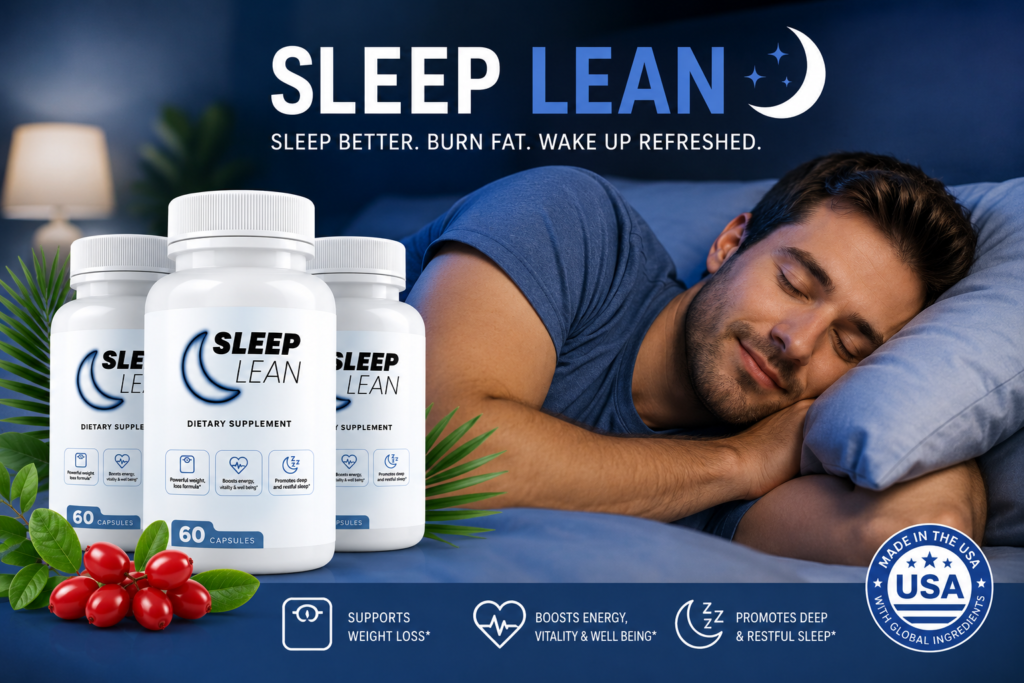
SleepLean
Here’s something most metabolic health guides completely miss: the single fastest way to improve your insulin sensitivity may be fixing your sleep. SleepLean was designed with exactly this in mind — a natural formula that enhances deep sleep quality while simultaneously supporting fat metabolism overnight.
Why does this matter for insulin resistance? Because deep sleep is when your body resets insulin signaling, balances cortisol, releases growth hormone, and performs metabolic repair. Without it, no diet or exercise plan can reach its full potential.
Why SleepLean Targets Insulin Resistance at Its Root
 Enhances deep sleep architecture
 Supports overnight fat metabolism
 Wake up energized, not groggy
 Supports healthy cortisol balance
 Boosts morning metabolism
 Supports growth hormone release
The Sleep-Insulin Connection (Why This Matters)
- Deep sleep is when your body produces the majority of its growth hormone — critical for fat burning and insulin sensitivity
- Even partial sleep deprivation (6 hours vs 8) increases insulin resistance by up to 25% in healthy adults
 Cortisol (stress hormone) drops to its lowest during deep sleep — the same cortisol that drives blood sugar spikes when elevated
- Your body burns the most fat during sleep stages 3 & 4 (deep sleep) — SleepLean is formulated to extend these stages
Related Reading: Read our full SleepLean Review — including how deep sleep affects testosterone, growth hormone, cortisol, and insulin resistance in detail.

Brain Health · Focus · Stress & Cortisol
NeuroSerge
There’s a reason insulin resistance is now called “Type 3 diabetes” by some neuroscientists — the brain is deeply affected by chronic blood sugar dysregulation. Brain fog, poor focus, memory decline, and mental exhaustion are often the earliest signs that something metabolic is wrong.
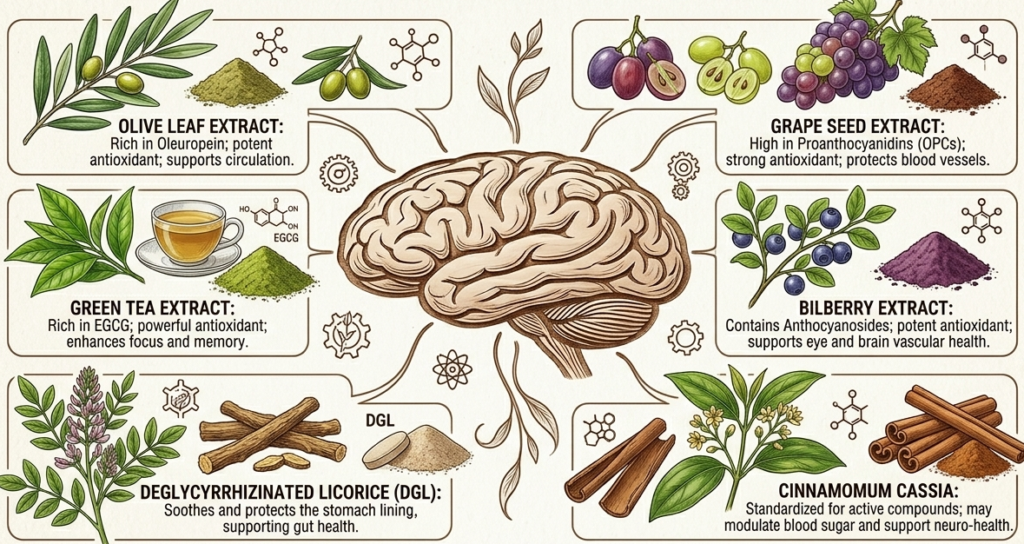
NeuroSerge is an advanced cognitive support supplement formulated to address brain health from multiple angles simultaneously — supporting circulation, antioxidant protection, stress resilience, and neuroprotection using over 20 carefully selected natural ingredients.
NeuroSerge Key Ingredients & Their Role in Metabolic Brain Health
- 🫒 Olive Leaf ExtractPowerful anti-inflammatory; supports healthy blood pressure and vascular function
- 🍵 Green Tea ExtractEGCG supports insulin sensitivity and brain cell protection simultaneously
- 🍇 Grape Seed ExtractOPCs protect blood vessels, support circulation to the brain
- 🫐 Bilberry ExtractRich in anthocyanins; supports retinal and cerebrovascular health
- 🌿 Deglycyrrhizinated LicoriceSupports cortisol balance and the HPA axis (stress regulation system)
- 🍂 Cinnamomum CassiaClinically studied for improving insulin sensitivity and blood sugar control
How NeuroSerge Helps with Insulin Resistance Side Effects
- 🧠 Clears brain fog from blood sugar dysregulation
- 🎯 Improves focus and mental energy
- 📉 Supports healthy cortisol levels
- 🩸 Supports healthy blood circulation to the brain
- 🛡️ Antioxidant protection against metabolic inflammation
- ⚗️ Non-GMO, gluten-free, non-habit-forming
Who is NeuroSerge for? Anyone experiencing brain fog, poor concentration, mental fatigue, or mood instability connected to blood sugar or chronic stress. It’s particularly powerful when combined with blood sugar management habits and sleep optimization.
🔗 The Full Insulin Resistance Picture — Everything Is Connected
Insulin resistance doesn’t exist in a vacuum. It’s deeply intertwined with sleep, stress, belly fat, and metabolic health. Here are the essential companion guides to this article:
😴 Deep Sleep: The Fastest Way to Improve Insulin Sensitivity
Most people underestimate how transformative sleep is for metabolic health. 80% of the hormonal reset your body needs happens during deep sleep stages — including insulin sensitivity restoration, cortisol clearance, growth hormone release, and fat oxidation.
Read: SleepLean Review — How Deep Sleep Burns Fat & Reverses Insulin Resistance — our full breakdown of how optimizing sleep is one of the most powerful metabolic interventions available.
🩸 Blood Sugar Control: The Direct Line to Reversing Insulin Resistance
You cannot reverse insulin resistance without addressing blood sugar directly. Our dedicated blood sugar guide covers everything — from dietary strategies to the top natural compounds with clinical evidence for glucose regulation.
Read: Gluco6 Review — Our Top Pick for Natural Blood Sugar Control — a detailed look at Gluco6, formulated specifically to support healthy glucose metabolism and insulin sensitivity.
😤 Stress Management: Cortisol Is Insulin’s Worst Enemy
Every time cortisol spikes, blood sugar spikes too — automatically. Managing stress isn’t just good for your mental health; it’s one of the most direct ways to improve insulin sensitivity. Our guide covers practical, evidence-based daily strategies.
🔥 Belly Fat & Metabolism: The Visceral Fat–Insulin Resistance Loop
Belly fat isn’t just cosmetic. Visceral fat actively secretes inflammatory compounds that worsen insulin resistance — and high insulin makes it nearly impossible to lose belly fat. Breaking this cycle requires a specific metabolic approach.
Read: How to Lose Fat & Increase Metabolism Naturally — our comprehensive guide to breaking the insulin-fat storage cycle for good.
🍵 Cardio Slim Tea & The Smoothie Diet — Targeted Belly Fat Solutions
Since insulin resistance drives belly fat accumulation specifically, targeted approaches to abdominal fat loss can be a powerful part of your strategy. Two options we’ve reviewed that many readers have found helpful:
Read: Cardio Slim Tea Review — a natural herbal tea blend designed to support belly fat reduction and healthy metabolism.
Read: The Smoothie Diet Review — a popular 21-day digital program using nutrient-dense smoothie recipes to reset blood sugar, reduce belly fat, and restore metabolic health. Highly relevant for anyone with insulin resistance.

❓ Frequently Asked Questions About Insulin Resistance
Yes — in most cases, insulin resistance is fully reversible, especially when caught early. The key drivers are lifestyle habits: regular movement (especially walking), quality sleep, stress management, dietary changes, and targeted supplementation. Many people see significant improvements in insulin sensitivity within 4–12 weeks of consistent lifestyle changes. The earlier you start, the faster and more complete the reversal.
The two fastest interventions are: (1) Exercise — particularly a 30-minute walk after meals, which directly activates glucose uptake in muscle cells without insulin. (2) Improving deep sleep quality — even a few nights of better sleep can measurably improve insulin sensitivity. Combining these with reduced sugar intake and stress management creates rapid, compounding results.
Sleep is when your body performs metabolic repair and hormone reset. During deep sleep, growth hormone is released (which supports fat burning and insulin sensitivity), cortisol drops to its daily low, and insulin signaling pathways are restored. When sleep is poor or too short, cortisol stays elevated, growth hormone release is suppressed, and your cells become less responsive to insulin the next day. Even one week of sleeping 5–6 hours versus 8 hours can produce measurable insulin resistance in healthy adults. See our SleepLean review for more on optimizing sleep for metabolic health.
Absolutely. Cortisol — your primary stress hormone — triggers glucose release from the liver as part of the “fight or flight” response. This is useful in a real emergency, but in chronic stress, cortisol is constantly elevated, meaning blood sugar is constantly elevated, meaning insulin is constantly elevated. Over time, this creates insulin resistance. Managing stress is not just good for your mental health — it’s a direct metabolic intervention.
High insulin levels directly promote fat storage — particularly in the abdominal area, which has more insulin receptors than other fat depots. Additionally, insulin blocks the release of fat from fat cells for fuel, making it nearly impossible to lose belly fat when insulin is chronically elevated. This is also why visceral (belly) fat is both a symptom and a cause of insulin resistance — it creates a cycle. Check our Cardio Slim Tea review and Smoothie Diet review for targeted belly fat approaches.
Yes — this is one of the most common but under-recognized symptoms. The brain relies on glucose as its primary fuel, but it also requires insulin to use that glucose effectively. When brain cells become insulin-resistant, they’re essentially starved for energy despite having plenty of glucose available. This leads to cognitive slowdown, poor memory, difficulty concentrating, and mental fatigue. NeuroSerge is specifically formulated to address this cognitive component of insulin resistance — see our full NeuroSerge review here.
Morning light exposure triggers a cascade of hormonal events via your circadian system that directly benefits metabolic health. It suppresses late-onset melatonin, stimulates cortisol’s natural morning peak (which then drops properly throughout the day), and sets the internal clock that governs when your body is most insulin-sensitive. Research shows morning light exposure is associated with lower BMI, better sleep, lower cortisol, and improved insulin sensitivity — all in one simple, free daily habit. Aim for 10–20 minutes of outdoor light within 1 hour of waking.
Several natural compounds have strong clinical evidence for improving insulin sensitivity: Cinnamon (Cinnamomum cassia) — found in NeuroSerge — improves cellular insulin response. Green Tea Extract (EGCG) — also in NeuroSerge — supports both brain health and glucose metabolism. Berberine is one of the most researched compounds for blood sugar, comparable in some studies to metformin. Magnesium deficiency is extremely common in people with insulin resistance. Sleep-supporting supplements like SleepLean indirectly improve insulin sensitivity by restoring sleep quality. See our Gluco6 review for our top blood sugar supplement pick.
✅ Your Action Plan: Start Reversing Insulin Resistance Today
Insulin resistance is serious — but it’s also deeply reversible. And the path to reversing it isn’t complicated. It just requires understanding what’s happening and taking consistent action.
Here’s your simple starting action plan:
- Tomorrow morning: Get outside within 1 hour of waking — even 10 minutes of sunlight
- After your next meal: Walk for 20–30 minutes — even a gentle walk makes a measurable difference
- Tonight: Create a sleep environment that supports deep rest — dark, cool, no screens 1 hour before bed
- This week: Remove liquid sugar (soda, juice, energy drinks) from your daily routine — the single highest-impact dietary change
- Daily: Practice 10 minutes of stress reduction — breathwork, meditation, or simply sitting in nature
- Support your metabolism: Consider targeted supplements like SleepLean for sleep and fat metabolism, and NeuroSerge for brain health and cortisol support
Your body is incredibly resilient. Given the right inputs, it wants to heal. You don’t need perfection — you need consistency.

Take the First Step Toward Metabolic Freedom
Start with sleep. Start with movement. Start with the right supplements. Every single day you take action, your cells become more responsive, your energy improves, and your body gets closer to the version of itself it was meant to be.
Join our community  and get daily wellness tips delivered to your inbox