
Having trouble staying focused can make even simple tasks feel difficult. You may start reading something and quickly lose attention, check your phone without thinking, or sit down to work but struggle to concentrate for more than a few minutes.
The good news is that focus is not simply something you either have or do not have. Sleep, stress, nutrition, physical activity, your environment, and the way you manage distractions can all affect your ability to concentrate.
This guide explains what focus is, what can interfere with it, and practical ways to improve mental focus and attention span.
What Is Focus?
Focus is the ability to direct your attention toward a specific task, thought, or source of information while limiting distractions.
For example, when you read a book, your brain needs to keep attention on the words and meaning instead of constantly switching to other thoughts.
Focus and concentration are closely related, but concentration also describes your ability to maintain that attention over time.
Your ability to focus can change throughout the day. You may concentrate well after a good night’s sleep but struggle after several hours of poor sleep or during a stressful period.
Factors that can affect focus include:
- Lack of sleep
- Stress and anxiety
- Constant digital distractions
- Poor nutrition
- Dehydration
- Lack of physical activity
- Too many simultaneous tasks
- Certain medications or substances
- Some medical or mental health conditions
If difficulty concentrating is persistent, severe, or affecting school, work, relationships, or daily life, it is worth discussing it with a healthcare professional rather than assuming it is simply a lack of discipline.
Why Is It Sometimes So Hard to Stay Focused?
Difficulty focusing does not always have one cause.
Modern life creates many opportunities for attention switching. Notifications, social media, emails, videos, and multiple open tasks can repeatedly pull your attention away from what you are doing.
Stress can also make concentration harder. When your mind is occupied with worries, part of your attention is already being used elsewhere.
Sleep is another major factor. Even when you have enough time to work, poor-quality sleep can leave you feeling mentally slower and less attentive.
Your basic physical needs matter too. Being hungry, dehydrated, inactive, or overly tired can make it harder to sustain attention.
Instead of immediately looking for a supplement or complicated technique, start by checking these basic factors.
Brain Structures Involved in Focus and Memory
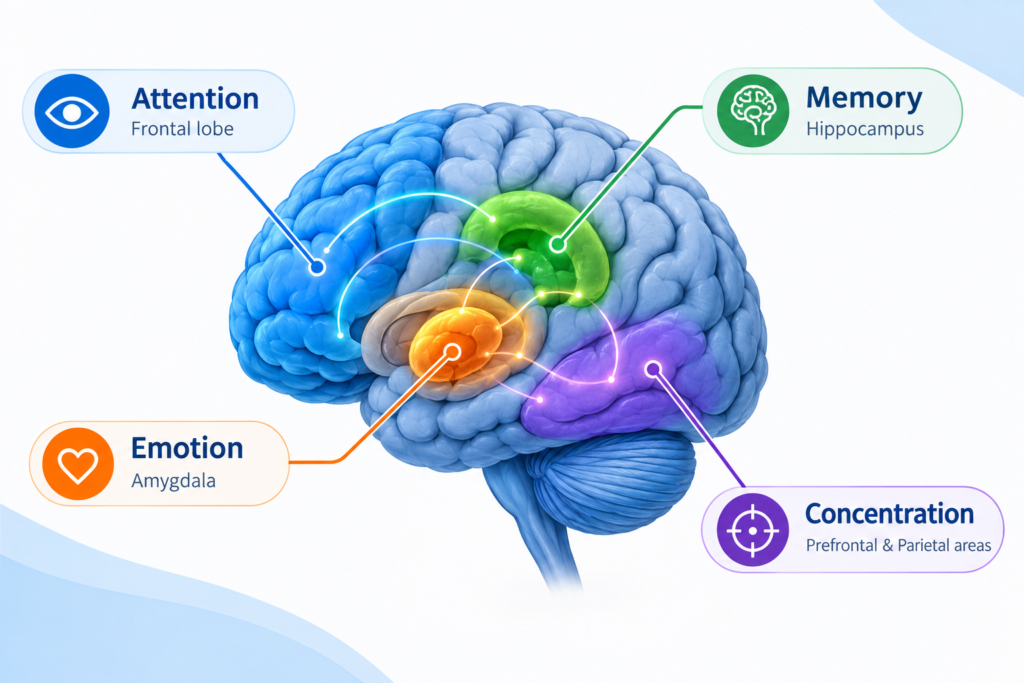
Focus is not controlled by a single part of the brain. Several brain networks work together to manage attention, memory, emotion, motivation, and decision-making.
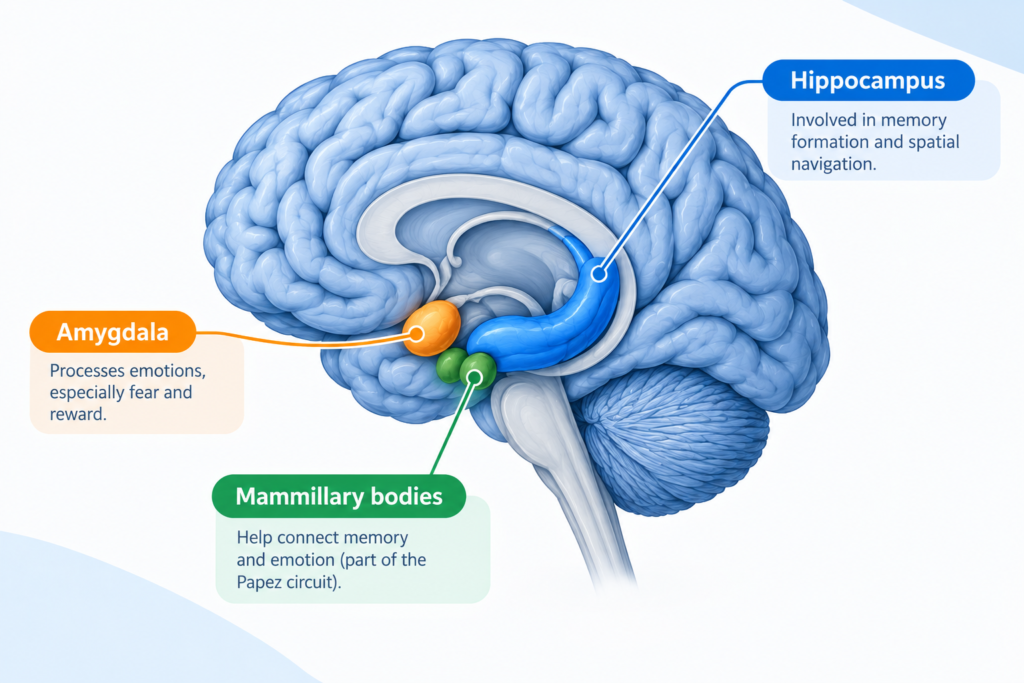
The limbic system is particularly relevant to memory and emotional processing. Two structures commonly discussed in this context are the hippocampus and amygdala.
Hippocampus
The hippocampus plays an important role in forming and retrieving memories. It also interacts with other brain systems involved in learning and attention.
Because learning requires both attention and memory, healthy hippocampal function is important when you are trying to absorb and remember new information.
Amygdala
The amygdala is involved in processing emotional information, particularly fear and other forms of threat-related responses.
Stress and strong emotions can influence attention, which helps explain why it can be difficult to concentrate when your mind is overwhelmed.
Mammillary Bodies
The mammillary bodies are small structures involved in memory-related brain circuits and are closely connected with the hippocampal system.
They are particularly relevant when discussing vitamin B1 deficiency because severe thiamine deficiency can affect brain regions involved in memory.
Can Vitamin B1 Affect Focus and Memory?
Vitamin B1, also called thiamine, is essential for normal energy metabolism and nervous-system function.
Severe thiamine deficiency can cause serious neurological problems. One well-known condition associated with severe thiamine deficiency is Wernicke-Korsakoff syndrome, which can cause confusion and significant memory problems.
Chronic heavy alcohol use is an important risk factor because alcohol can interfere with thiamine intake, absorption, storage, and utilization.
This does not mean that everyone with poor concentration has a B1 deficiency. Most people should not assume that a vitamin deficiency is the reason they cannot focus.
A better approach is to make sure your diet provides adequate essential nutrients while addressing the more common causes of poor concentration, such as inadequate sleep, stress, dehydration, and excessive distractions.
Foods containing thiamine include:
- Pork
- Legumes
- Whole grains
- Nuts and seeds
- Some fortified cereals
- Nutritional yeast
Nutritional yeast can be particularly rich in B vitamins, although the exact amount depends on the product and whether it has been fortified.
If you suspect a nutrient deficiency, especially if you have a restrictive diet or another health condition, discuss appropriate testing and supplementation with a healthcare professional.
Can Keto or a Low-Carb Diet Improve Focus?
Some people report feeling more mentally clear after reducing refined carbohydrates and added sugars. However, that does not mean a ketogenic diet is automatically the best diet for concentration.
A useful starting point is to reduce foods that provide a lot of added sugar while offering little nutritional value.
Instead, build meals around nutrient-dense foods such as:
- Vegetables
- Eggs
- Fish
- Lean meats
- Nuts and seeds
- Legumes, when appropriate for your diet
- Whole grains or other minimally processed carbohydrate sources
- Healthy fats
Very-low-carbohydrate and ketogenic diets can change how the body produces and uses energy, including increasing ketone production. Research into ketogenic diets and brain function is active, but evidence does not establish that a ketogenic diet is necessary for healthy focus in the general population.
The claim that eating carbohydrates generally creates an oxygen-starved or “hypoxic” limbic system should therefore not be presented as an established fact.

Can Intermittent Fasting Improve Focus?
Intermittent fasting is another approach sometimes discussed in relation to brain health.
Research has investigated whether fasting and metabolic changes can influence processes such as cellular maintenance and brain function. Some findings are promising, but evidence does not mean that intermittent fasting will automatically increase concentration or attention in every person.
If you want to try time-restricted eating, start conservatively rather than using extreme fasting schedules.
For example, some adults choose to keep their meals within a consistent daily window and avoid late-night eating.
The most important point is that fasting should not cause you to become dehydrated, excessively hungry, weak, or unable to meet your nutritional needs.
Intermittent fasting may also be inappropriate for some people, including certain people with diabetes, people taking medications that affect blood glucose, people with a history of eating disorders, pregnant or breastfeeding women, and others with specific medical conditions.
If that applies to you, speak with a healthcare professional before changing your eating pattern.
How To Improve Attention Span & Focus? – Dr.Berg
How to Improve Mental Focus Naturally
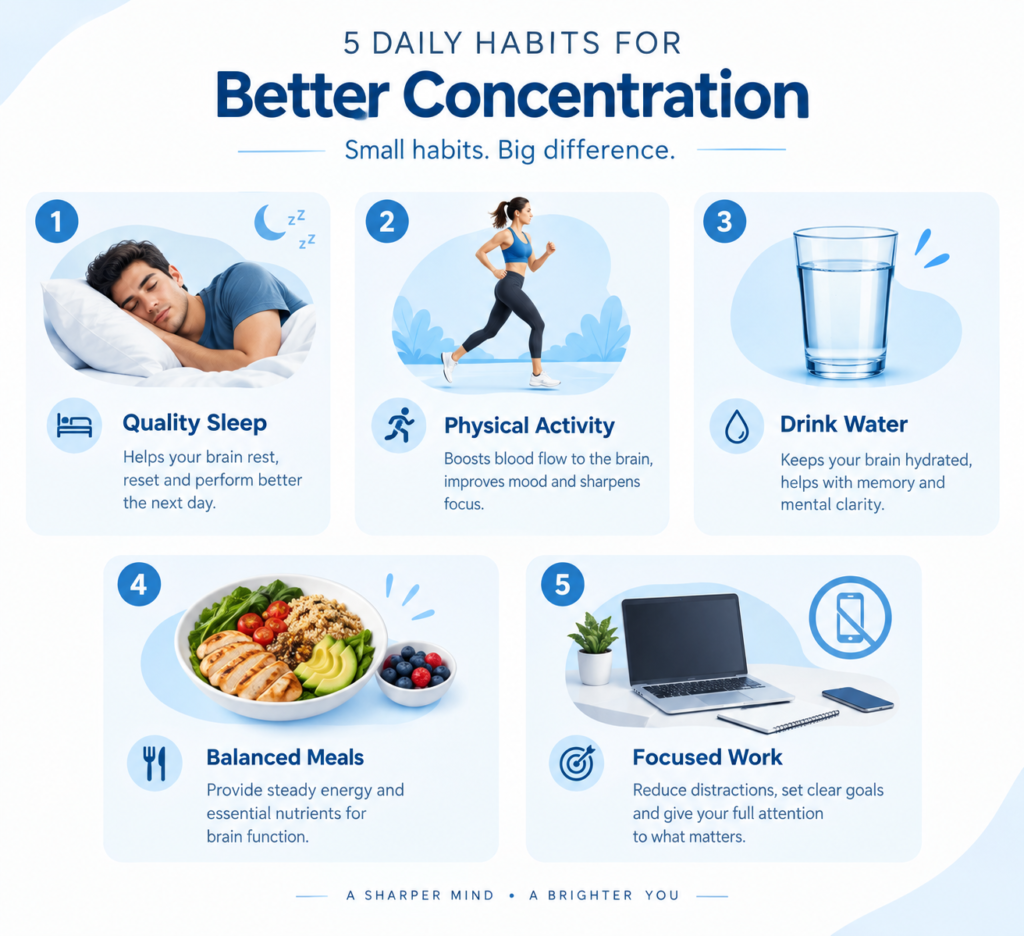
If you want to know how to focus better, start with simple habits that have a direct effect on your daily routine.
1. Protect Your Sleep
Aim for a consistent sleep schedule and give yourself enough time to sleep. Poor sleep can make it harder to maintain attention, process information, and control distractions.
2. Remove Distractions
Do not rely entirely on willpower. Put your phone away when you need concentrated work. Turn off unnecessary notifications and close tabs that you do not need.
3. Work on One Important Task
Multitasking often means rapidly switching attention between tasks. Instead, choose one important task and work on it for a defined period before taking a short break.
4. Move Your Body
Regular physical activity supports overall brain and cardiovascular health and may also help mood and cognitive function. Even a daily walk is a useful starting point.
5. Stay Hydrated
Dehydration can contribute to fatigue and difficulty concentrating. Keep water available during the day, particularly when exercising or spending time in hot conditions.
6. Eat Regular, Balanced Meals
Rather than focusing only on one nutrient or diet, build meals that provide protein, fiber, healthy fats, vitamins, and minerals. Reducing excessive added sugar and highly processed foods can also make your overall diet more nutritious.
How to Increase Your Attention Span
Your attention span can feel shorter when you constantly switch between different sources of stimulation.
Instead of trying to concentrate for hours immediately, train your ability to stay with one task gradually.
Try this simple method:
- Choose one task.
- Remove obvious distractions.
- Set a manageable focus period.
- Work only on that task.
- Take a short break.
- Repeat the process.
- Gradually increase the length of your focus periods.
The goal is not to force yourself to concentrate when you are exhausted. It is to create conditions in which sustained attention becomes easier.
You can also practice focused activities such as reading, writing, studying, solving problems, or learning a new skill.
Over time, reducing constant attention switching may make it easier to remain engaged with one activity.
What Should You Do If You Can't Stay Focused?
If you can’t stay focused occasionally, look at your recent habits first.
Ask yourself:
- Did I sleep enough?
- Have I been under unusual stress?
- Am I constantly checking my phone?
- Have I been skipping meals or eating poorly?
- Am I drinking enough water?
- Have I been physically active?
- Am I trying to do several things at once?
- Has this problem been happening for weeks or months?
If concentration problems are persistent or getting worse, consider talking with a healthcare professional.
Ongoing difficulty focusing can sometimes be related to sleep problems, medication effects, nutritional deficiencies, mood disorders, ADHD, thyroid problems, or other health conditions. A professional can help determine whether further evaluation is appropriate.
A Simple Daily Focus Routine
You do not need to completely change your lifestyle overnight.
Start with a simple routine:
- Morning
- Get enough sleep on a consistent schedule.
- Drink water.
- Eat a balanced breakfast if you normally eat in the morning.
- Avoid immediately filling your attention with social media.
- During work or study
- Eat nutritious meals.
- Stay hydrated.
- Get some physical activity.
- Give yourself periods without constant notifications.
- Evening
- Reduce stimulating screen activity before bed.
- Keep a consistent bedtime.
- Prepare your priorities for the following day.
These simple habits may do more for everyday concentration than constantly searching for a quick “focus booster.”
FAQ: Improving Focus and Concentration
Start by improving the basics: sleep, hydration, physical activity, nutrition, and your working environment. Remove distractions and focus on one task at a time.
Regular sleep, exercise, balanced nutrition, stress management, hydration, and reducing digital distractions are practical ways to support mental focus without relying on supplements.
Practice sustained attention gradually. Choose one task, remove distractions, work for a manageable period, take a short break, and slowly increase the amount of time you can concentrate.
Poor concentration can be linked to sleep deprivation, stress, anxiety, distractions, dehydration, poor nutrition, certain medications, and various health conditions. Persistent problems deserve professional evaluation.
Severe thiamine deficiency can cause neurological problems, including Wernicke-Korsakoff syndrome, which can involve serious memory impairment. However, poor concentration alone does not mean you have a B1 deficiency.
Research is exploring the effects of fasting on brain and metabolic health, but there is not enough evidence to say that intermittent fasting reliably improves concentration for everyone.
Start by checking sleep, stress, nutrition, hydration, exercise, and distractions. If difficulty concentrating is persistent, severe, or interfering with daily life, speak with a healthcare professional.
Related Reading
Related
If you are interested in the nutritional side of memory and concentration, you can also explore our guide to
Best Supplements for Memory and Focus → .
Remember that supplements are not a substitute for adequate sleep, a balanced diet, physical activity, or appropriate medical care.
Conclusion
Learning how to increase focus is less about finding one powerful trick and more about creating the right conditions for your brain to work well.
Start with the fundamentals:
- Get consistent, sufficient sleep.
- Reduce unnecessary distractions.
- Move regularly.
- Stay hydrated.
- Eat a balanced, nutrient-dense diet.
- Practice focusing on one task at a time.
- Manage stress.
- Address persistent concentration problems with a healthcare professional.
Nutrition can support brain health, and nutrients such as vitamin B1 are important for normal nervous-system function. However, there is no need to assume that one vitamin, diet, or fasting method is the answer to every focus problem.
If your difficulty concentrating continues despite improving your habits, look beyond lifestyle changes and consider whether an underlying issue needs professional attention.
Tips to improve concentration →
External resource – HARVARD Health Publishing