
Last updated: August 2026
If you’re searching for how to reduce blood sugar levels without medication, you may be looking for practical changes that can actually fit into everyday life.
The good news is that blood sugar isn’t controlled by medication alone.
What you eat, how much you move, when you move, your body weight, sleep, stress, and even how you structure your meals can all influence how your body handles glucose.
For people with prediabetes or type 2 diabetes, these lifestyle factors can make a meaningful difference. Regular physical activity, healthier eating patterns, weight management, and other daily habits are recognized parts of blood sugar management.
But there is an important distinction:
Lifestyle changes can support better blood sugar control, but they should not be used as a reason to stop prescribed diabetes medication without medical guidance.
In some people with type 2 diabetes, substantial and sustained weight loss can even lead to diabetes remission, meaning blood glucose returns to the non-diabetes range without glucose-lowering medication. However, remission is not considered a permanent “cure,” and blood sugar can rise again if weight is regained.
So instead of looking for a miracle food, drink, or supplement, let’s look at the evidence-based habits that can make the biggest difference.
What Does It Mean to Lower Blood Sugar Naturally?
Blood sugar, or blood glucose, is the main sugar circulating in your blood.
After you eat carbohydrates, your digestive system breaks them down into glucose. Your body then uses insulin to help move glucose from your bloodstream into your cells.
When this process doesn’t work efficiently, blood glucose can remain elevated.
This can happen with insulin resistance, prediabetes, or diabetes.
The goal isn’t to eliminate carbohydrates or force blood sugar as low as possible.
The goal is to help your body handle glucose more effectively and keep blood sugar within a healthy range.
That usually means improving several habits at the same time:
- Eating balanced meals
- Choosing higher-fiber carbohydrates
- Reducing sugary drinks and highly refined foods
- Moving regularly
- Walking after meals
- Building muscle
- Maintaining a healthy weight
- Getting adequate sleep
- Managing chronic stress
- Monitoring your response when appropriate
Think of these as small levers that work together, rather than one magic solution.
1. Start With What You Put on Your Plate
Food is one of the biggest factors affecting blood glucose after a meal.
But “eat less sugar” is an incomplete way to think about blood sugar management.
Carbohydrates are the main macronutrient that raises blood glucose, but the amount and type of carbohydrate matter. What you eat alongside those carbohydrates matters too.
Protein, fat, and fiber can slow how quickly carbohydrates are absorbed.
Try the simple plate method
A practical starting point is to divide your plate into three sections:
½ plate: non-starchy vegetables
Examples:
- Broccoli
- Spinach
- Green beans
- Peppers
- Cucumber
- Lettuce
- Cauliflower
- Zucchini
¼ plate: protein
Examples:
- Fish
- Chicken
- Eggs
- Tofu
- Greek yogurt
- Beans
- Lentils
¼ plate: carbohydrate-rich food
Examples:
- Brown rice
- Oats
- Whole-grain pasta
- Beans
- Potatoes
- Whole grains
- Fruit
This approach is recommended by organizations such as NIDDK and the CDC because it helps manage portions without requiring you to weigh every ingredient.
The goal isn’t a perfect diet
You don’t need to completely eliminate bread, rice, pasta, or fruit.
Instead, ask:
“What can I add to this carbohydrate to make the meal more balanced?”
For example:
Instead of eating a large bowl of white rice alone, combine a smaller portion with vegetables and a protein source.
That simple change can make a meal more balanced and may reduce the speed and size of the glucose rise.

2. Reduce Sugary Drinks Before You Obsess Over Every Food
One of the easiest changes is also one of the most overlooked:
Look at what you’re drinking.
Soda, sweetened coffee, energy drinks, sports drinks, sweet tea, and many fruit drinks can deliver a large amount of rapidly absorbed carbohydrate without making you feel particularly full.
The CDC recommends choosing water and other drinks with little or no added sugar as part of a healthy eating pattern.
Better everyday choices include:
- Water
- Sparkling water without added sugar
- Unsweetened tea
- Unsweetened coffee
- Water flavored with lemon or mint
And remember:
Whole fruit is not the same thing as fruit juice.
Eating an orange provides fiber and requires digestion. Drinking orange juice makes it much easier to consume several oranges’ worth of sugar in a short period.
The CDC specifically notes that fruit juice can raise blood sugar faster than eating whole fruit.
A simple experiment
For the next 7 days:
Replace one sugary drink each day with water or an unsweetened alternative.
You don’t have to overhaul your entire diet overnight.
Small changes that you can repeat are more valuable than extreme changes you abandon after a week.
3. Eat More Fiber-Rich Foods
Fiber deserves special attention when you’re trying to improve blood sugar control.
Unlike many other carbohydrates, fiber isn’t fully broken down and absorbed by the body.
Fiber-rich foods can help with blood sugar control, weight management, and overall digestive health.
Good sources include:
- Beans
- Lentils
- Chickpeas
- Oats
- Barley
- Vegetables
- Berries
- Apples
- Pears
- Nuts and seeds
- Whole grains
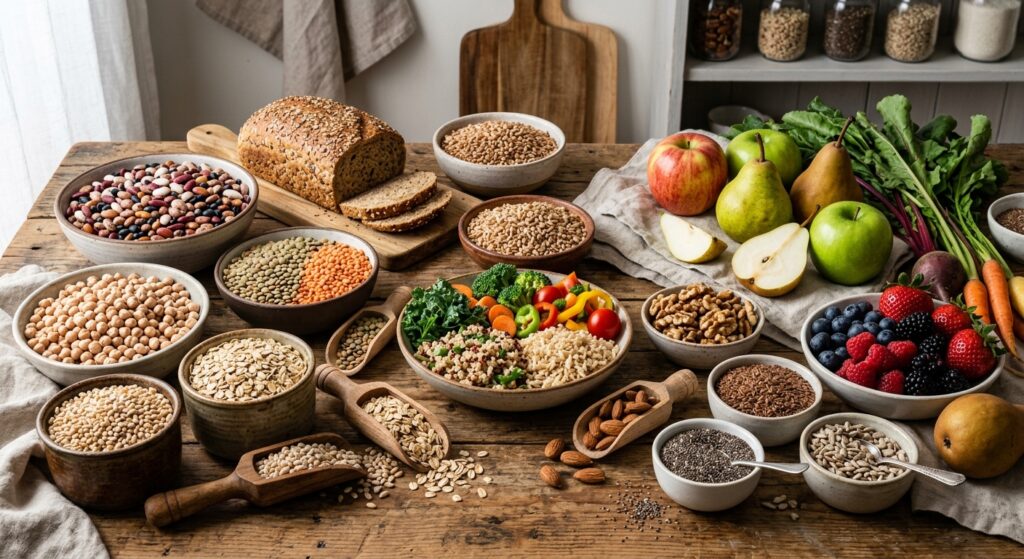
Rather than focusing only on “low-carb” foods, think about higher-quality carbohydrates.
For example:
Instead of:
White bread + sugary spread
Try:
Whole-grain bread + eggs + vegetables
Instead of:
Sweet cereal
Try:
Plain oats + berries + nuts
The difference isn’t simply the number of carbohydrates.
It’s the overall composition of the meal.
4. Take a Walk After Eating
This may be one of the simplest blood sugar habits to add to your day.
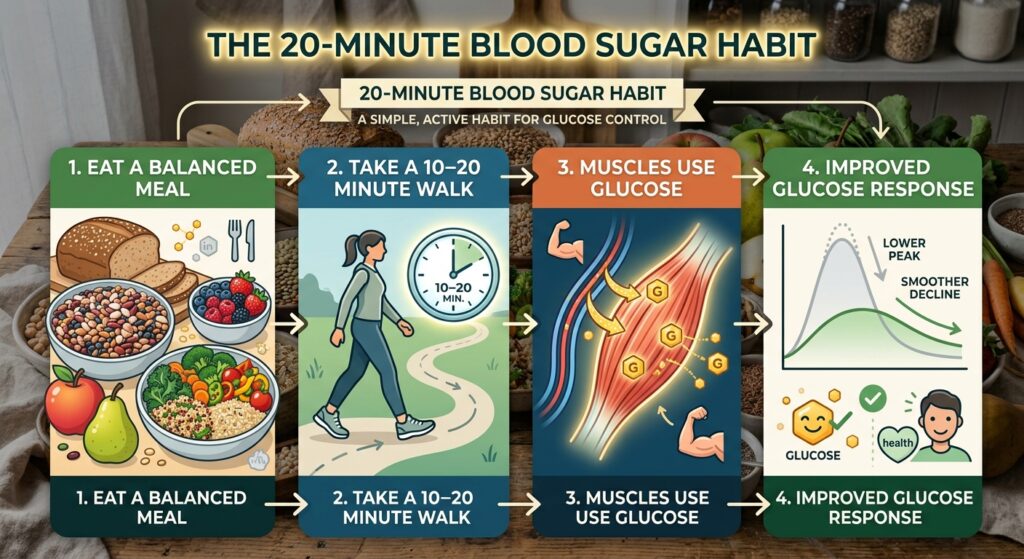
Your muscles need energy when they contract.
During physical activity, muscles can take up glucose from the bloodstream, helping reduce blood glucose. Exercise also improves insulin sensitivity.
And research suggests that timing matters.
A systematic review and meta-analysis found that exercise after eating had a greater acute effect on post-meal glucose excursions than exercise before eating or remaining inactive.
Another study found that 20 minutes of walking shortly after dinner produced a better glucose response than walking before dinner in people with type 2 diabetes.
You don't need a complicated workout.
Try:
10–20 minutes of easy-to-moderate walking after a meal.
You could:
- Walk around your neighborhood
- Walk around the office
- Do household chores
- Walk while talking on the phone
- Take the stairs
- Walk around a shopping area
The goal is consistency.


A useful daily routine
Breakfast → normal activity
Lunch → 10-minute walk
Dinner → 10–20-minute walk
You don’t need to turn every meal into an exercise session.
Even short periods of movement can be easier to maintain than one large workout.
5. Don't Sit for Hours Without Moving
You can exercise for 30 minutes and still spend the rest of the day sitting.
That’s why your overall movement throughout the day matters.
A 2026 systematic review and meta-analysis examined 53 studies and found that breaking up prolonged sitting with short activity breaks improved post-meal glucose and insulin responses. Walking breaks showed particularly strong effects.
Try the “movement snack” approach
Every 20–30 minutes, ask yourself:
“Can I move for a couple of minutes?”
You could:
- Stand up
- Walk around the room
- Take a short staircase break
- Stretch
- Get water
- Walk while making a phone call
These small actions may seem insignificant.
But repeated throughout the day, they can dramatically change how much time you spend sedentary.
6. Build Muscle, Not Just Cardio
Walking is excellent.
But don’t ignore strength training.
Your muscles are major users of glucose, and physical activity can increase insulin sensitivity. Regular exercise can therefore help your body use glucose more effectively.
The American Diabetes Association recommends aiming for around 150 minutes of moderate physical activity per week, along with strength training sessions.
Beginners can start with:
- Bodyweight squats
- Wall push-ups
- Resistance bands
- Light dumbbells
- Step-ups
- Basic strength machines
You don’t need to become a bodybuilder.
The objective is simply to progressively make your muscles stronger.
A realistic weekly target
Try:
150 minutes of moderate activity + 2 strength sessions per week.
You can divide the activity into smaller sessions.
For example:
- 30 minutes × 5 days
- 20 minutes × 5 days + additional walking
- 10-minute sessions spread throughout the day
The best exercise routine is the one you can actually maintain.
7. If You Have Excess Weight, Even Modest Weight Loss Can Help
This is one of the most important parts of the conversation.
If you’re carrying excess body weight, losing even a relatively small amount can improve metabolic health.
The CDC recommends that people with prediabetes who have overweight aim for approximately 5%–7% weight loss, together with regular physical activity.
For someone weighing 200 pounds, that’s approximately:
10–14 pounds.
You don’t need to reach an “ideal” weight before your health improves.
Why does weight matter?
Excess body fat, particularly fat stored around internal organs, can contribute to insulin resistance.
As weight decreases, insulin sensitivity can improve in many people.
And for some people with type 2 diabetes, substantial sustained weight loss can lead to remission.
NIDDK explains that significant weight loss through lifestyle intervention can sometimes return blood glucose to the non-diabetic range without medication.
But there’s an important distinction:
Remission is not the same as a permanent cure.
Blood sugar can rise again if significant weight is regained.

8. Pay Attention to When and How You Eat
Meal timing isn’t a magic solution.
But the composition and order of foods may influence what happens to your blood sugar after eating.
Research has investigated whether eating vegetables and protein before carbohydrate-rich foods can reduce post-meal glucose excursions.
A systematic review found that eating carbohydrates later in the meal, after vegetables and/or protein-rich foods, tended to produce lower glucose and insulin excursions, although the certainty of the evidence varies.
A newer systematic review in people with diabetes also found that most included studies reported benefits from a carbohydrate-last meal pattern.
A simple meal-order experiment
Instead of:
Bread → potatoes → dessert → vegetables
Try:
Vegetables → protein → carbohydrate
For example:
- Salad or vegetables
- Chicken, fish, eggs, or beans
- Rice, potatoes, whole grains, or another carbohydrate
This isn’t about eating your food in a rigid order forever.
It’s simply another practical strategy you can experiment with.
9. Protect Your Sleep
Sleep is often treated as a separate health issue.
But it can affect metabolism too.
A systematic review and meta-analysis involving people with type 2 diabetes found associations between poor sleep quality, abnormal sleep duration, and higher HbA1c levels.
The CDC also notes that inadequate sleep can affect insulin and hormones involved in blood sugar regulation.
Aim for better sleep habits
Try:
- Going to bed at a consistent time
- Keeping your bedroom dark and comfortable
- Limiting screens before bed
- Avoiding very heavy meals immediately before sleep
- Getting regular daytime activity
- Creating a relaxing bedtime routine
You don’t need a perfect sleep schedule.
Start by making your bedtime more consistent.
10. Manage Chronic Stress
Stress isn’t just something you “feel.”
Stress hormones can affect blood glucose.
The CDC explains that stress hormones can cause blood sugar to rise or fluctuate unpredictably.
That doesn’t mean every stressful moment will cause a dangerous glucose spike.
But chronic stress can make healthy habits harder to maintain and may interfere with sleep, eating patterns, and physical activity.
Simple ways to lower daily stress
Try:
- Walking outdoors
- Deep breathing
- Meditation
- Yoga
- Spending time with friends
- Listening to music
- Reading
- Taking short breaks during work
- Spending time in nature
Even a few minutes can be a useful reset.
What About Cinnamon, Apple Cider Vinegar, Berberine and Other Natural Remedies?
This is where it’s important to separate promising research from proven treatment.
You’ll find countless products online claiming to “balance blood sugar naturally.”
Some ingredients have been studied for glucose metabolism.
But the quality and strength of the evidence varies considerably between supplements.
And “natural” doesn’t automatically mean safe or effective.
If you’re interested in exploring supplements as an additional wellness strategy, we’ve created a separate guide that looks at specific products and ingredients in greater detail:
→ Best Natural Supplement for Blood Sugar Control (2026 Wellness Guide)
In that guide, we’ll look more closely at natural blood-sugar-support products, including Solaray Berberine and Gluco6, their ingredients, formulation, potential benefits, limitations, and what consumers should consider before buying.
Important: Supplements should be viewed as an optional complement to healthy lifestyle habits—not a replacement for prescribed diabetes treatment.
How to Monitor Whether Your Lifestyle Changes Are Working
One of the biggest mistakes people make is changing five things at once and then having no idea what actually helped.
Instead, try making changes systematically.
For example:
Week 1
Replace sugary drinks with water or unsweetened drinks.
Week 2
Add a 10–15 minute walk after your largest meal.
Week 3
Use the balanced plate method.
Week 4
Add two resistance-training sessions.
Then pay attention to how you feel and, when appropriate, monitor your glucose according to your healthcare professional’s recommendations.
If you’re interested in understanding what happens to glucose after meals, read:
Blood Sugar Levels After Eating: What’s Normal & How to Lower Them Naturally
This is especially useful if you want to understand post-meal blood sugar spikes, why they happen, and which lifestyle habits can help.
Should You Monitor Your Blood Sugar at Home?
For some people, glucose monitoring can make lifestyle changes more tangible.
Instead of simply thinking:
“I think this meal is healthy.”
You can learn:
“This is how my body actually responded to this meal.”
Depending on your situation, monitoring may involve a traditional blood glucose meter or a continuous glucose monitor (CGM).
However, not everyone needs to monitor glucose continuously.
Your healthcare professional can help determine whether monitoring is appropriate and what your target ranges should be.
If you’re interested in learning about the different options, see our guide:
Best Glucose Monitors for Non-Diabetics: CGMs, Meters & Accessories
A Simple Daily Blood Sugar-Friendly Routine
You don’t need to completely redesign your life.
Here’s an example of what a realistic day could look like.
Morning
Breakfast
- Protein source
- Fiber-rich carbohydrate
- Fruit or vegetables
- Unsweetened beverage
After breakfast
Take a short walk if possible.
Afternoon
Lunch
Use the plate method:
- ½ non-starchy vegetables
- ¼ protein
- ¼ carbohydrate
Then take a short walk.
Evening
Dinner
Focus on:
- Vegetables
- Protein
- A reasonable carbohydrate portion
Then walk for 10–20 minutes.
Before bed
- Reduce screen time
- Relax
- Maintain a consistent bedtime
It doesn’t sound dramatic.
That’s the point.
Blood sugar management is usually built through ordinary habits repeated consistently.
7 Changes You Can Start Today
1. Replace one sugary drink
Choose water or an unsweetened drink.
2. Walk after your largest meal
Start with 10 minutes
3. Add vegetables to lunch and dinner
Make them a major part of your plate.
4. Include protein with your meals
Eggs, fish, chicken, tofu, beans, or another suitable source.
5. Choose higher-fiber carbohydrates
Try oats, beans, lentils, whole grains, vegetables, and whole fruit.
6. Break up long periods of sitting
Stand and move regularly throughout the day.
7. Protect your sleep
Aim for a consistent sleep schedule.
These aren’t flashy hacks.
They’re the habits that can become part of your life.
What Can Make Blood Sugar Worse?
It’s also useful to understand common triggers.
Blood sugar can be affected by:
- Large meals
- Sugary drinks
- Refined carbohydrates
- Physical inactivity
- Stress
- Poor sleep
- Illness
- Dehydration
- Certain medications
- Skipping or changing meals
- Weight gain
The CDC notes that stress, illness, food intake, sleep, dehydration, and other factors can all influence glucose levels.
This is why looking at your overall pattern is more useful than blaming one particular food.
Can You Really Lower Blood Sugar Without Medicine?
Sometimes—but it depends on the person and the underlying condition.
Someone with mildly elevated glucose or prediabetes may be able to make substantial improvements through weight management, physical activity, and dietary changes.
Some people with type 2 diabetes can achieve remission after significant, sustained weight loss.
But other people need medication to keep blood glucose within a safe range.
And people with type 1 diabetes require insulin.
So the better question isn’t:
“How can I replace my medication?”
It’s:
“What lifestyle changes can I make to improve my blood sugar and overall metabolic health?”
That question leads to much safer and more useful decisions.
When Should You Talk to a Doctor?
Don’t rely exclusively on lifestyle changes if you have persistent high blood sugar or symptoms of diabetes.
Talk with a healthcare professional if you’re experiencing symptoms such as:
- Excessive thirst
- Frequent urination
- Unexplained weight loss
- Unusual fatigue
- Blurred vision
- Slow-healing wounds
- Recurrent infections
A simple blood test can help determine whether you have prediabetes or diabetes.
And if you’ve already been diagnosed with diabetes, don’t stop, reduce, or change prescribed medication on your own.
Lifestyle changes can work alongside medical treatment—and sometimes they can eventually change how much treatment a person needs—but those decisions should be made with a healthcare professional.
Frequently Asked Questions
Lifestyle changes can improve blood glucose for many people, particularly through healthy eating, physical activity, weight management, sleep, and stress management. However, whether someone can safely manage diabetes without medication depends on their individual condition.
Never stop prescribed medication without discussing it with your healthcare professional.
There isn’t one universal “fastest” method.
Physical activity, particularly movement after eating, can have an immediate effect on post-meal glucose. Longer-term improvements usually come from consistent habits involving diet, exercise, weight management, sleep, and stress.
Yes. Physical activity helps muscles use glucose and can improve insulin sensitivity. Research also suggests that walking after meals can reduce post-meal glucose excursions.
There isn’t one perfect duration for everyone.
Starting with 10–20 minutes of walking after a meal is a practical approach. The important thing is choosing an amount of activity you can perform safely and consistently.
Water isn’t a treatment for diabetes, but staying adequately hydrated supports normal body function. Dehydration can contribute to higher blood glucose readings because there is less fluid in the bloodstream.
Yes. Fiber-rich foods can support blood sugar management and weight management. Because fiber isn’t fully digested and absorbed, it doesn’t raise blood glucose in the same way as digestible carbohydrates.
For people who have overweight or obesity, weight loss can improve insulin sensitivity and blood glucose control. In some people with type 2 diabetes, significant sustained weight loss can contribute to remission.
Carbohydrates don’t necessarily need to be eliminated.
Instead, focus on portion size, fiber-rich carbohydrate sources, and balanced meals containing vegetables and protein. The right carbohydrate intake varies from person to person.
Berberine is a dietary supplement that has been studied for glucose metabolism, but it should not automatically be considered a replacement for diabetes medication.
If you’re considering a supplement, especially if you already take glucose-lowering medication, discuss it with a healthcare professional first.
For a detailed look at natural blood-sugar-support supplements, see our upcoming guide:
Best Natural Supplement for Blood Sugar Control (2026 Wellness Guide)
The Bottom Line
If you want to reduce blood sugar levels without medication, don’t start by searching for a miracle ingredient.
Start with the fundamentals.
Build meals around vegetables, protein, and high-fiber foods.
Reduce sugary drinks.
Move your body regularly.
Take a short walk after meals.
Break up long periods of sitting.
Build muscle.
Work toward a healthy weight if you have excess weight.
Protect your sleep.
Find practical ways to manage stress.
And, when appropriate, use glucose monitoring to understand how your body responds.
These changes may seem small individually.
But together, they can create a very different metabolic environment over time.
And perhaps the most encouraging part is that you don’t have to change everything tomorrow.
Start with one habit.
Make it consistent.
Then build from there.
Want to explore natural blood-sugar-support supplements?
We’ve created a separate guide comparing two popular options and explaining what to look for before buying.
This article is for educational and wellness purposes only and is not a substitute for medical advice, diagnosis, or treatment.
Join our community  and get daily wellness tips delivered to your inbox